
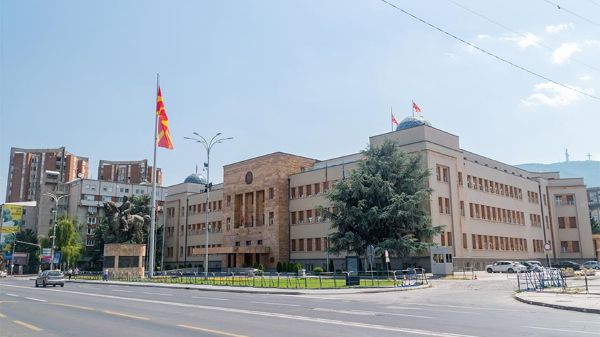
The Secretary General of the 46-member Council of Europe, Alain Berset, is scheduled to undertake an official visit to North Macedonia on 7 and 8 May. During this visit, he will convene with the nation’s highest officials, including President Gordana Siljanovska-Davkova, who holds the distinction of being the country’s first female head of state and is a former member of the Council of Europe’s Venice Commission.
Discussions are planned with Prime Minister Hristijan Mickoski, Minister for Foreign Affairs and Foreign Trade Timcho Mucunski, Minister of Justice Igor Filkov, and Minister of European Affairs Bekim Sali. Furthermore, the Secretary General will engage with Members of Parliament, including the delegation to the Parliamentary Assembly of the Council of Europe (PACE), as well as representatives from civil society.
A joint press conference with the Minister for Foreign Affairs and Foreign Trade is scheduled for Thursday, 7 May, in the lobby of the Ministry of Foreign Affairs and Foreign Trade.
Notably, the visit will culminate in a signing ceremony on Friday, 8 May, for the Council of Europe Framework Convention on Artificial Intelligence and Human Rights, Democracy, and the Rule of Law. This ceremony will signify North Macedonia’s commitment to ensuring that technological innovation is firmly anchored in fundamental rights.
“Democracy must deliver for people in their everyday lives. This means stronger institutions, respect for the rule of law, and inclusive societies where all communities feel protected and heard,” said Secretary General Alain Berset ahead of the visit.
On Thursday, 7 May, Secretary General Berset will co-host the international conference titled “Leading Change: People-Centred Paths to Demographic Resilience,” in collaboration with senior representatives from the United Nations. This conference emphasises the importance of inclusive, forward-thinking policies to address demographic challenges and enhance democratic resilience.
The Secretary General’s visit to Skopje provides a valuable opportunity to discuss key regional and international issues. During this visit, he is expected to encourage ongoing efforts to strengthen good neighbourly relations, particularly with Bulgaria, and to support the collaborative initiatives facilitated by the Council of Europe that advance the rights of various communities.
Furthermore, the Secretary General will acknowledge North Macedonia’s active participation in Council of Europe legal instruments, exemplified by its signature of significant conventions, such as the Convention for the Protection of the Profession of Lawyer and the Valletta Protocol. These actions reflect the country’s commitment to upholding the rule of law and fostering international cooperation. He will also stress the importance of continued reforms in critical areas, including the judiciary, the fight against corruption, and the effective implementation of judgments of the European Court of Human Rights, reaffirming the Council of Europe’s readiness to support these endeavours.
