
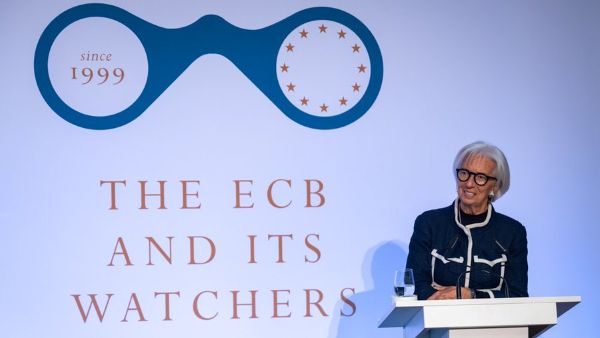
The President of the European Central Bank (ECB), Christine Lagarde, stated that businesses might be quicker to raise prices in response to the oil shock caused by the Iran war. This is due to the painful memories of the inflation spike that occurred after Russia invaded Ukraine in 2022. Lagarde warned that if oil and gas prices continue to rise, “the response of firms and workers may be faster than last time.” She shared these insights during a speech at a conference in Frankfurt, Germany, on Wednesday.
“We have a more recent memory of high inflation, which could affect how quickly costs are passed on and compensation is sought,” Lagarde said.
In 2022, the ECB effectively addressed the inflation spike by raising interest rates. However, this experience has left a significant impression, as noted by ECB President Christine Lagarde.
She stated, “An entire generation has now experienced its first episode of high inflation, and it may not respond as slowly the next time.” The inflation rate in the eurozone peaked at 10.6% in October 2022, primarily due to the invasion, which led to the cessation of most Russian natural gas supplies and temporary increases in oil prices. As of February, the inflation rate had decreased to 1.9%, according to figures from Eurostat, the EU’s statistical agency.
Lagarde highlighted that monetary policy alone cannot directly reduce oil prices and that central banks typically do not raise interest rates in response to transitory energy price spikes. An increase in rates is warranted only if higher energy prices begin to influence the costs of other goods and workers’ wages, which could trigger a price spiral. “If the energy shock is perceived to be limited in scope and short-lived, the traditional approach of looking beyond it should apply,” she explained, given that the effects of interest rate changes are often delayed by several months. By then, inflationary pressure may have already subsided.
Generally, central banks increase interest rates to counter inflation, which helps to mitigate rising prices by increasing borrowing costs for mortgages and new production facilities. Lagarde indicated that the current increase in oil prices may be less inflationary than initially anticipated, as the present spike is smaller than that experienced in Europe during 2021-2022.
However, should inflation trends persistently exceed the ECB’s target of 2%, she noted, “the response must be appropriately forceful or persistent.” Lagarde emphasised that it is “too early to determine what position we will need to take in this spectrum.” In a recent policy meeting on March 19, the ECB decided to maintain its key interest rate at 2%.
