
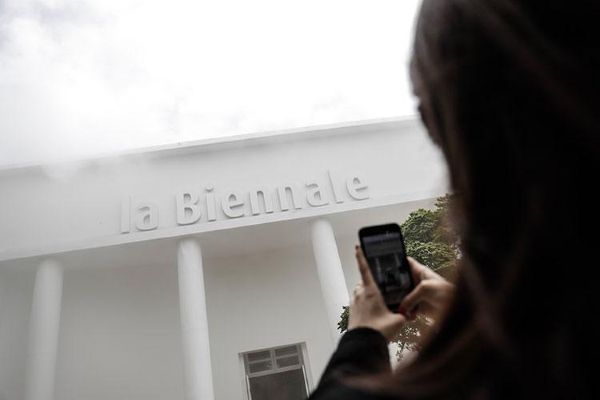
The opening of this year’s Venice Biennale of Art turned into a controversial affair after its director allowed Russia and Israel to have an exhibition in the storied national pavilion, part of the exhibition, after years of absence.
The 61st edition of the art exhibition, the most ancient and prestigious in the world, has been marred by controversy for weeks following the unilateral decision by the Biennale Foundation president, Pietrangelo Buttafuoco. The decision led the entire jury to resign in protest, weeks before the opening. Buttafuoco found a ‘creative’ solution, making visitors the ones voting for their favourite pavilions and pieces.
The Biennale of Art is divided into two spaces. One in the Arsenale area for the main exhibition, usually curated by an external figure and with a specific theme. This year, the curator was the late Koyo Kouoh, who selected artworks under the theme “In Minor Keys”. The second part of the Giardini, and across the city of Venice, is made up of national pavilions, usually with free rein over their themes and artwork. While the former concerns individual artists, the latter involves national governments. The Russian pavilion has been closed for both art and architecture biennales since the Russian invasion of Ukraine in 2022, while Israel’s has been closed since 2024.
Buttafuoco chose to reopen Russia’s national pavilions, a move that caused dismay even from Italy’s government, which had originally appointed him to the post. The move also cost the Biennale foundation 2 million euros of European funds. The Biennale defended the decision, saying that Russia still maintains diplomatic relations with Italy and is therefore entitled to open the exhibition. Due to the intense protests, the Russian pavilion will be open only for previews from 5 to 8 May and will remain closed to the public for the rest of the Biennale.
During the opening event, the situation was tense, as the Russian pavilion continued with performances by DJs – the pavilion will host performances and an open bar throughout the week. Close by, the Ukrainian pavilion was unveiled, featuring an origami-deer statue from the war-torn Donbas region, installed in 2024, when the frontline was mere kilometres away.
Co-curator of the Ukrainian pavilion, Ksenia Malykh, told AP that the Biennale’s decision to reopen to Russia and its justification of neutrality are “a false attempt to stay neutral.” She said, “They say that art is beyond politics, but they are using art as a weapon in a hybrid war in Europe,” and added that the whole point was never about art; it was only a statement about their participation.
In addition, several Palestinians and pro-Palestinian activists marched outside and inside the exhibition in the Giardini with the names of artists who were killed in Gaza.
This article used information from The Associated Press.
