
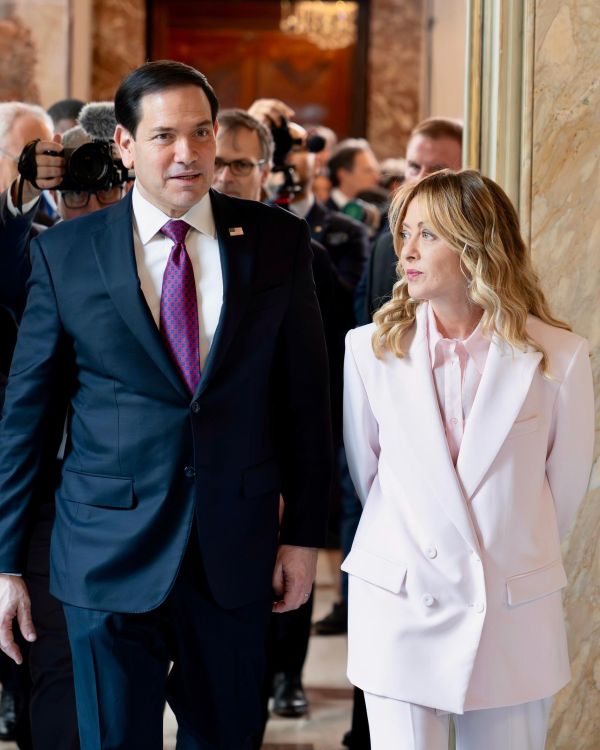
US Secretary of State Marco Rubio called on European allies on Friday to progress beyond verbal statements and implement concrete measures against Iran. Rubio paid a two-day visit, aimed at mending relations with Italy and the Vatican, in light of recent tensions stemming from the US-Israeli conflict in Iran.
Following discussions with Italian Premier Giorgia Meloni and Foreign Minister Antonio Tajani, Secretary Rubio expressed significant concern regarding Iran’s efforts to assert control over the strategically important Strait of Hormuz. He characterised this development as “unacceptable” and a substantial threat to global security.
Rubio emphasised, “There is a broad consensus that Iran poses a threat and that it should not be allowed to obtain a nuclear weapon. However, it is imperative to take decisive action. If the response to this issue is in the negative, then we must ensure we have more than just strongly worded statements to support our position.”
PM Meloni posted on X that she had a broad and constructive discussion with the US Secretary. “We addressed numerous issues, from bilateral relations between Italy and the United States to the main international matters, including the crisis in the Middle East, freedom of navigation in the Strait of Hormuz, the stabilisation of Libya, and the peace process in Lebanon and Ukraine. A frank dialogue between allies who defend their own national interests but who both know how precious Western unity is.”
Rubio explained US ‘red line’
Rubio warned that Iran is trying to establish control over an international waterway, a move that could set a dangerous precedent. He cautioned Tehran against attacking US maritime assets, stating that the US thwarted attacks on three Navy ships in the Strait. “The red line is clear: if they threaten Americans, they will be blown up,” he said.
Rubio mentioned that Washington is pursuing a diplomatic strategy, including a proposed UN Security Council resolution to ensure freedom of navigation. He indicated that the US is awaiting Iran’s response to ongoing diplomatic efforts. His visit follows weeks of disagreements between Washington and Rome over the Iran war, tariffs, and President Donald Trump‘s criticisms of Prime Minister Meloni and Pope Leo XIII.
Differences over Iran war
Tajani adopted a conciliatory tone after discussions with Rubio, highlighting the importance of the transatlantic alliance. He stated, “I am convinced that Europe needs America—Italy needs America—and the United States also needs Europe and Italy.” The talks addressed issues such as the Iran conflict and its impact on Lebanon, as well as Venezuela and Cuba.
Despite efforts to ease tensions, differences over Iran persist. Italy opposes the US-Israeli bombing campaign, which Meloni has called “illegal,” and resists offensive involvement. Tajani noted that Italy could contribute naval forces to clear mines in the Strait of Hormuz after a ceasefire and reaffirmed its role in the UN peacekeeping mission in Lebanon. He also emphasised the need for a continued US troop presence in Europe amidst concerns about troop reductions.
No final decision on NATO troops
Rubio mentioned that there has been “no final decision” on NATO troop adjustments, which will depend on US national interests. The US plans to withdraw 5,000 troops from Germany, and Trump has threatened further troop reductions from Italy and Spain due to their positions on the war. Italy, a key logistics hub, recently declined to allow US bombers to use a base in Sicily without parliamentary approval, citing constitutional constraints and public opposition. Meloni, facing pressure from a recent referendum defeat, has stated that any use of Italian bases for offensive operations requires parliamentary backing.
The war has also raised economic concerns in Italy, with warnings that disruptions in the Strait of Hormuz could increase energy costs and inflation. At the same time, US tariffs threaten the country’s export-driven economy.
An attempt to ease tensions with the Vatican
Rubio also sought to ease tensions with the Vatican following Trump’s criticism of the pope’s calls for peace. After a lengthy meeting on Thursday with the pontiff and Vatican Secretary of State Cardinal Pietro Parolin, Rubio said Washington remained committed to a “productive and fruitful” relationship with the Catholic Church.
Rubio confirmed that the discussion at the Vatican included Cuba, where Washington expressed hope that the church’s Caritas charity would continue distributing humanitarian aid. The US has provided about $6 million in aid to Cuba, pending government approval, and has also offered an additional $100 million, which has not been accepted.
US officials noted that the Vatican talks emphasised strong bilateral ties and a shared commitment to peace, despite ongoing differences over the Iran war.
This article used information from The Associated Press.
