
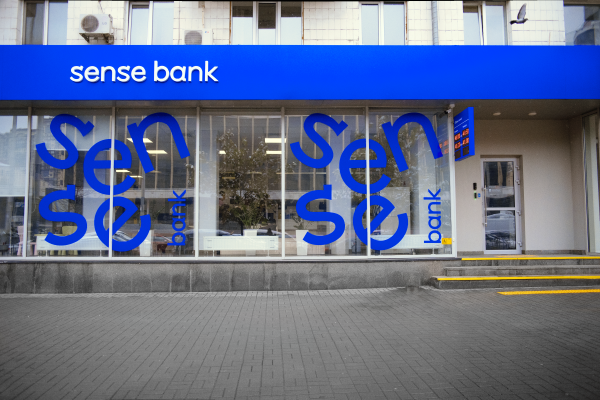
Ukraine’s wartime campaign against Russian-linked assets was meant to show that sanctions and nationalisation could protect the country’s economy while weakening Kremlin influence. A growing scandal surrounding state-owned Sense Bank now threatens to undermine that case.
Newly released recordings tied to the so-called “Mindich tapes” suggest that individuals linked to a major Ukrainian corruption investigation may have exerted influence over the bank’s governance after it was nationalised from Russian owners. The affair has sparked parliamentary inquiries, intensified scrutiny of Ukraine’s anti-corruption institutions, and raised uncomfortable questions for Kyiv’s Western partners.
From Alfa-Bank to Sense Bank
Before Russia’s full-scale invasion in 2022, Sense Bank operated as Alfa-Bank Ukraine, part of the Alfa Group empire, associated with Russian billionaires Mikhail Fridman and Petr Aven, and their Luxembourg-based holding company, ABH Holdings. Following the invasion, Ukraine imposed sanctions on the bank’s owners and moved to remove the institution from the market. In July 2023, the government nationalised the bank, purchasing 100% of its shares for a symbolic one hryvnia.
Officials argued the move was necessary to prevent sanctioned Russian interests from retaining influence over a major financial institution during wartime. ABH Holdings rejected the nationalisation as unlawful and launched a claim exceeding $1 billion at the International Centre for Settlement of Investment Disputes.
The dispute was already politically sensitive. Western governments — particularly the United States and the European Union — had imposed sanctions on Fridman and Aven around the same period Ukraine finalised the seizure, and Ukrainian diplomats actively lobbied for tougher measures against Russian financial elites, presenting the nationalisation as part of a broader democratic response to aggression.
The Mindich tapes
The controversy escalated in 2026 when Ukrainian media released recordings allegedly connected to businessman Tymur Mindich, a figure tied to one of the largest corruption investigations under President Volodymyr Zelenskyy‘s administration. Mindich, who fled to Israel, is suspected of involvement in schemes connected to the state energy company Energoatom worth over $100 million. Several individuals have already faced charges; other senior political figures remain under investigation.
One recording reportedly captured a conversation between Oleksandr Tsukerman — identified by investigators as linked to the alleged corruption network — and businessman Vasyl Vesely, who later became connected to Sense Bank after nationalisation. According to the recordings, the two men discussed appointments to the bank’s supervisory board in detail. Vesely allegedly named specific individuals he wanted installed and spoke of needing a reliable majority on the nine-member board.
Weeks later, six of the names mentioned in the conversation were appointed by the Ukrainian government to that board.
The recordings also reportedly referenced “Khirurg” — “the Surgeon” — an alias investigative journalists associated with Andriy Yermak, the influential head of the presidential office. No criminal charges against Yermak have been announced.
Political fallout
The revelations triggered immediate consequences. Mykola Hladyshenko, chairman of the bank’s supervisory board and one of the individuals mentioned in the recordings, suspended his participation in board activities after the tapes became public. Ukraine’s National Bank began reviewing governance at Sense Bank and examining whether senior management had complied with independence standards. Parliament established an inquiry commission focused on economic security and possible outside influence over the bank.
The scandal has proven particularly damaging because Sense Bank was supposed to symbolise Ukraine’s effort to strip oligarchic and Russian influence from the financial sector. Critics argue the tapes suggest the institution may simply have changed hands from one network of influence to another.
Wider implications
The fallout extends well beyond domestic politics. Western governments justified sanctions and asset seizures as tools to defend international law and curtail Kremlin-linked financial influence. If a state-seized institution was subsequently steered by politically connected actors under corruption investigation, opponents of sanctions policy will have fresh material to challenge the credibility of those measures.
The affair may also complicate Ukraine’s legal defence in the ICSID arbitration launched by ABH Holdings. Lawyers for the former owners are likely to argue that post-nationalisation governance undermines any claim that the seizure served a clear public interest. The scandal arrives, too, as the EU struggles to finalise $90 billion in financial assistance for Ukraine — allegations of political interference in state-owned institutions are certain to intensify demands for tighter oversight of aid flows.
A test of commitment
Ukraine’s leadership has long argued that democratic reform and anti-corruption efforts are central to the country’s European future. The Sense Bank affair is a direct test of that commitment.
Independent investigators, opposition lawmakers, and anti-corruption activists are calling for a full audit of the bank’s operations since nationalisation. The credibility of sanctions policy depends not only on punishing Russian influence but on ensuring confiscated assets are managed transparently afterwards.
The instinct to defer difficult investigations until after the war is understandable. But experience from post-conflict states shows that corruption networks left untouched during crises tend to entrench themselves and grow harder to dismantle. Ukraine’s strongest international argument has always been its claim to defend democratic governance against authoritarian aggression. Allowing this scandal to fester would weaken precisely that case.
