
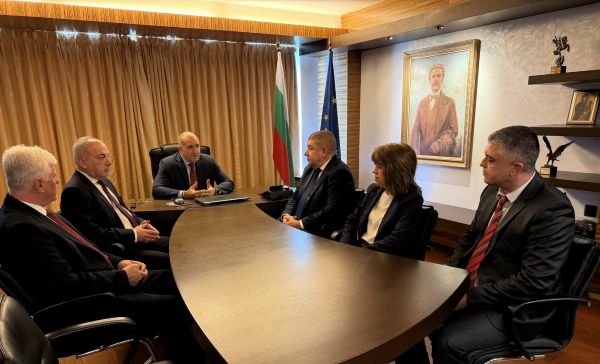
As anticipated, former President of Bulgaria, Rumen Radev, has officially registered a three-party political alliance, Progressive Bulgaria, which will participate in the parliamentary elections on 19 April. Radev resigned from his position on 23 January, sparking speculation about the establishment of a new political party to contest the forthcoming elections. Following the resignation of the previous government last December, Bulgaria is preparing for its eighth parliamentary election in the span of four years.
Radev, who first assumed the presidency in 2016 and was re-elected in 2021 with the endorsement of the Socialist Party, was expected to maintain his largely ceremonial role until the conclusion of his term in 2026. He has consistently criticised the coalition government led by Rosen Zhelyazkov, which resigned on 11 December after several weeks of protests concerning tax increases and perceived failures to address corruption. Throughout this period of political instability, Radev has exercised significant influence behind the scenes and has supported the protests that emerged in early December.
Moreover, he has expressed scepticism about Bulgaria’s recent decision to adopt the euro and has aligned himself with the Kremlin on the ongoing conflict in Ukraine, opposing sanctions against Russia. Radev remains one of the most popular figures in Bulgarian politics, owing to his populist discourse. In a January statement, he remarked, “Today’s political class has betrayed the hopes of the Bulgarian people.” He characterised the Progressive Bulgaria coalition as a response to the aspirations of Bulgarians seeking to dismantle the oligarchic model of corruption, emphasising that success will depend on the collective voice of the people.
The alliance comprises three parties: the Political Movement Social Democrats, represented by Elena Noneva; the Social Democratic Party, represented by Todor Barbolov; and the Movement “Our People,” represented by Atanas Kalchev. Galab Donev and Dimitar Stoyanov will jointly serve as co-chairs of the Progressive Bulgaria coalition.
Following its entry into the eurozone on 1 January, Bulgaria has continued to experience political instability, with parties unable to establish stable ruling coalitions since 2021 amid a fragmented parliament. Radev aspires to lead his coalition to a successful outcome in the elections on 19 April, with the intention of forming a government.
Recent polling data conducted in February suggests that Radev’s coalition could secure between 31% and 35% of the vote. The GERB–SDS coalition, led by Boyko Borisov, is projected to receive approximately 20%, while the liberal We Continue the Change – Democratic Bulgaria coalition may secure up to 13%. The DPS – New Beginning coalition, led by oligarch Delyan Peevski, is estimated to obtain around 10%. Notably, the right-wing extremist Revival (Vazrazhdane) party, led by Kostadin Kostadinov, has seen support decline, from 13% in December polls to an estimated 6% to 8%. This trend may indicate that Radev’s alliance is successfully engaging with the far-right and nationalist voter base.
The Bulgarian parliament, known as the National Assembly, consists of 240 seats, with 121 required for a majority. Additionally, a party or coalition must surpass a 4% threshold to gain representation in the assembly.
