
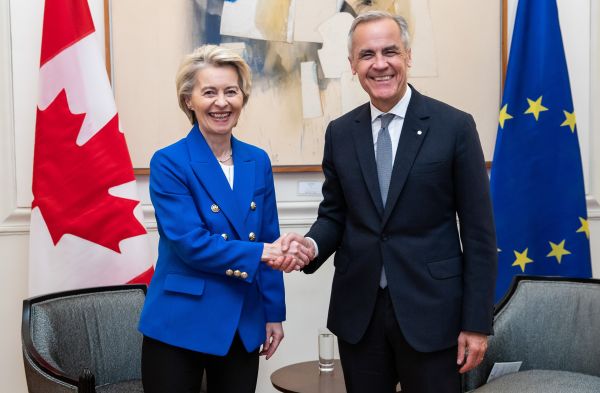
Canada joined the European Union defence fund on 1 December during a meeting between European Commission President Ursula von der Leyen and Canadian Prime Minister Mark Carney. This initiative reflects the country’s commitment to diversifying its military spending beyond reliance on the United States.
As part of this plan, Canadian defence companies will gain access to a €150 billion EU loan programme known as Security Action for Europe (SAFE). This programme will enable Canadian firms to secure cost-effective, EU-backed loans for the acquisition of military equipment.
In a Joint Statement, the two parties underscore that the “EU’s €150 billion defence investment instrument will ramp up Europe’s defence industrial base with joint procurement, in which all participating countries will benefit. In these geopolitically turbulent times, it is a means to increase cooperation, meet defence targets and spend better, as we address short-term urgency and long-term needs.”
Canada has become the first non-EU country to gain access to SAFE. Carney aims to diversify Canada’s procurement practices while also strengthening the nation’s relationship with the European Union. “Canada’s participation in SAFE will fill key capability gaps, expand markets for Canadian suppliers, and attract European defence investment into Canada,” Carney said in a statement.
The Prime Minister of Canada has previously indicated that no more than 70 cents of every dollar designated for Canadian military capital spending will be allocated to the United States. Actions taken by U.S. President Donald Trump, including initiating a trade dispute and suggesting that Canada consider becoming the 51st state, have generated significant concern among Canadians. This political climate has provided an opportunity for Carney to assume the role of prime minister, promising to address Trump’s increasing aggressiveness.
Currently, Carney’s administration is reviewing the procurement of U.S. F-35 fighter jets as part of an effort to explore alternative options. He has emphasised that the potential for enhanced domestic production in Canada will be a key consideration in this evaluation. A proposal from Sweden’s Saab indicates that the assembly and maintenance of the Saab Gripen fighter jet could take place in Canada.
Furthermore, Canada has committed to meeting NATO’s military spending guideline by early next year.
Additionally, “SAFE will also provide vital support to Ukraine and increase the resiliency of the Ukrainian defence industry. We have stood by Ukraine since the start of Russia’s brutal war of aggression, and we continue to stand by its side, as we work towards a just and lasting peace for Ukraine,” the Joint Statement concluded.
Negotiations regarding the U.K. joining the SAFE fund concluded without agreement last week. Discussions faltered over financial contributions, with Europe requesting more from Britain than it was prepared to offer.
This article used information from The Associated Press.
