
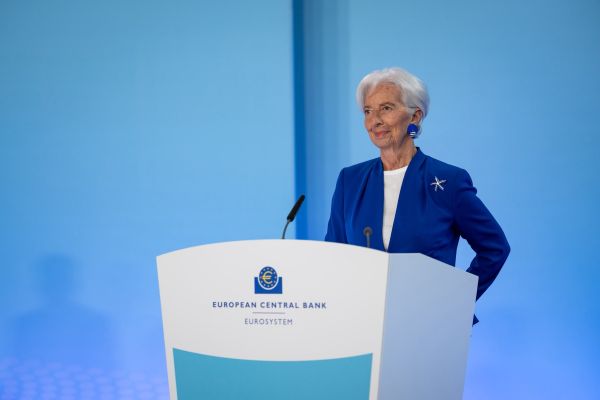
The European Central Bank (ECB) is optimistic about the potential peace deal between the US and Iran. Still, it warns that reopening the Strait of Hormuz does not mean immediate relief from inflation in the eurozone.
ECB President Christine Lagarde welcomed the news of a tentative deal reached by Washington and Tehran, saying to France Culture radio that “if this news is confirmed by developments in the coming days and the signing of a memorandum of understanding…it is good news.” She pointed out that the two parties should also reach an agreement on uranium enrichment.
Despite the optimism of the ECB president, the ECB Governing Council member and head of Germany’s Bundesbank, Joachim Nagel, spoke in more cautious terms during a meeting in Frankfurt.
According to him, the reopening will not signal a relief in the “foreseeable future”, warning that “it will take months for the oil supply to return to normal.” He predicted that inflation in the eurozone would remain high even as energy prices declined faster. He argued that even an increase in inflation is possible once the various measures governments across the eurozone have taken to limit energy price rises expire.
The ECB was forced to raise interest rates for the first time in almost three years at its last meeting, in a bid to curb rampant inflation driven by price hikes linked to the Iran war. Nagel believes the ECB may either keep rates stable or raise them again at its next policy meeting on 22-23 July.
