
Fifty years after the Helsinki Final Act, the principles that have underpinned security and co-operation in the OSCE area — sovereignty, territorial integrity, the inviolability of borders, the non-use of force, and respect for human rights — are facing their most severe test in a generation. Russia’s war of aggression against Ukraine remains the clearest and most brutal assault on this rules-based order. Yet the challenge extends far beyond the battlefield. Across the OSCE space, hybrid tactics, democratic erosion, and economic coercion are chipping away at the foundations of stability.
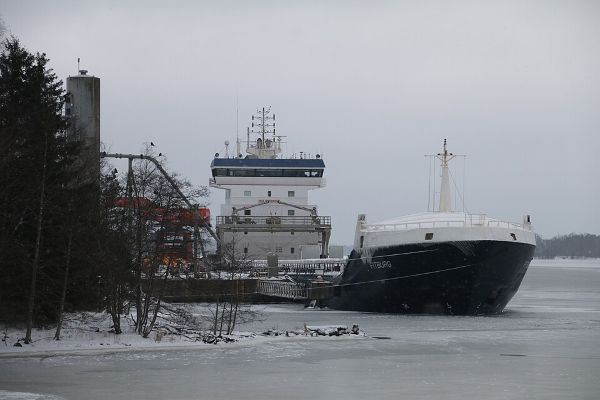
One particularly insidious example is the so-called shadow fleet — a fleet of aging tankers operating in the shadows to circumvent Western sanctions on Russian oil. These vessels, often with opaque ownership, frequent re-flagging, and disabled tracking systems, allow billions in energy revenues to continue flowing to Moscow’s war machine.
This is not merely sanctions evasion; it is a direct threat to maritime safety, environmental security, and the integrity of international law. Ship-to-ship transfers in poorly regulated waters raise the constant risk of catastrophic accidents, oil spills, and ecological disaster in sensitive regions like the Baltic Sea. The shadow fleet, therefore, undermines not only our sanctions regime but the very norms of lawful governance at sea that the OSCE and its partners claim to uphold. Closing these loopholes with stronger enforcement, common rules, and international co-ordination is no longer optional — it is imperative.
More than four years into the full-scale invasion, Russia’s war continues to exact a horrifying human toll: hundreds of thousands dead, entire cities reduced to rubble, and deliberate attacks on Ukraine’s critical energy infrastructure that leave civilians freezing in the dark. The reported abduction and deportation of around 20,000 Ukrainian children adds a particularly grotesque chapter to this tragedy. These are not collateral effects; they are part of a systematic effort to break a nation’s will and erase its future.
Supporting Ukraine is therefore not only an option — it is essential for defending the Helsinki principles across the entire OSCE area and upholding an international rules-based order. Greater transparency and accountability in the use of assistance strengthen, rather than weaken, long-term support. They reinforce Ukraine’s own democratic and anti-corruption reforms, which are essential to its resilience and to maintaining public trust among allies.
Ukraine’s fight is military, but its resilience is also democratic and institutional. Continued partnership should therefore advance its path toward stronger rule of law and transparent governance. Any credible peace process must be grounded firmly in international law: no rewards for territorial conquest, full respect for Ukraine’s internationally recognized borders, and meaningful inclusion of Ukraine in decisions about its future. The OSCE has unique tools — ceasefire monitoring, confidence-building measures, and post-conflict support — that should be prepared now for the day when political conditions allow their deployment.
The strains on comprehensive security are not limited to Ukraine. In Georgia, developments since the 2024 elections have triggered serious concerns about democratic backsliding, political pluralism, and fundamental freedoms.
Elsewhere in the South Caucasus, positive momentum between Armenia and Azerbaijan — including diplomatic engagements and progress toward normalization — offers hope. Sustained dialogue, border delimitation, and confidence-building can deliver lasting stability if all parties respect sovereignty and international commitments.
Further north, the Arctic and High North are emerging as a new arena of strategic competition. The Arctic must remain a zone of co-operation, environmental protection, and adherence to international law — not a theater for great-power confrontation.
There are escalating tensions around us that spill over into the OSCE area, particularly in the Middle East. Those are amplified by hybrid campaigns, disinformation, and the weaponization of artificial intelligence, enabling automated cyberattacks, rapid spread of falsehoods, and interference in democratic processes. Maritime security, especially the protection of subsea pipelines and cables in the Baltic Sea and elsewhere, demands heightened vigilance and co-operation.
The erosion of arms control adds another layer of risk. The expiration of New START in early 2026 removed the last major legal restraint on strategic nuclear arsenals between the U.S. and Russia. Rebuilding transparency, confidence-building measures, and risk-reduction mechanisms is vital. Nuclear war cannot be won and must never be fought.
Economic security is inseparable from these challenges. Dependence on concentrated supply chains for critical raw materials, energy, and technology creates exploitable vulnerabilities. Diversification, resilience, and resistance to economic coercion are now core elements of comprehensive security. Recent disruptions in global maritime chokepoints underscore how distant conflicts can rapidly affect OSCE economies.
At the heart of our response must be a stronger, better-resourced OSCE. The Organization remains uniquely positioned to foster dialogue across divides. Recent progress on the 2026 Unified Budget was welcome, but deep cuts in funding and staff risk undermining its capacity precisely when it is needed most. After internal progress in the field of transparency and compliance has been implemented, participating States must provide adequate resources, political attention, and commitment to reform — without using reform as an excuse for disengagement. Sustained support for field operations and parliamentary diplomacy is essential.
The OSCE Parliamentary Assembly and its members have a vital role to play. When we gather in The Hague for our Annual Session from 4 to 8 July, we will act as advocates, monitors, and bridge-builders. In our debates and in the Final Declaration adopted on 8 July, we will reaffirm the fundamental truth that the alternative to upholding these shared principles is not peace through accommodation, but a more dangerous, fragmented, and unstable continent. The time to act — with clarity, unity, and resolve — is now.

Tobias Winkler
Tobias Winkler is a Member of Parliament from Germany and serves as Rapporteur of the OSCE Parliamentary Assembly's General Committee on Political Affairs and Security.
