
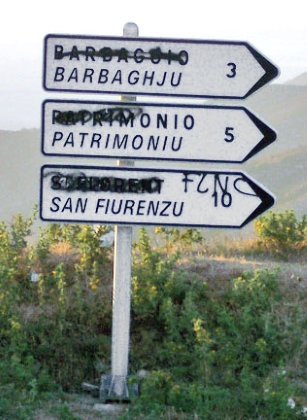
Corsican separatists have reemerged in the public eye following a clandestine press conference held by the Corsican National Liberation Front-Union of Combatants (FLNC-UC), during which the movement issued threats against individuals who are not from Corsica. This resurgence has reignited tensions surrounding the political future of the French island, bringing with it growing concerns regarding potential violence. The group has strongly opposed a constitutional bill that seeks to grant Corsica greater autonomy within the French Republic, calling it a “farce.”
In light of these developments, the National Anti-Terrorist Prosecutor’s Office (PNAT) initiated a preliminary investigation on 6 August for “criminal conspiracy to commit acts of terrorism.” This investigation also encompasses inquiries related to “the acquisition, possession, and transport of category A and B weapons, ammunition, or weapon components associated with a terrorist enterprise,” as reported by French media outlets.
On 4 August, the daily Corse-Matin reported on a clandestine press conference attended solely by their journalists. Around fifteen hooded and armed individuals rejected the proposed autonomy for the island and threatened non-Corsicans moving there. They denounced what they called “rampant settler colonialism,” linked to the yearly influx of nearly 5,000 foreigners, primarily from France, and the significant rise in second homes. They warned, “Collaborating in supporting constitutional texts that favour settler colonialism is a serious political mistake,” and added, “Until our national rights are recognised, we say: ‘Stay home.’ If you do not stay home, do not consider yourselves safe here.”
Members of the FLNC criticised an upcoming constitutional bill, set for Senate review starting 21 October, claiming it denies their people’s existence and fails to address the main demands of recent decades. They attacked Corsican nationalist parties supporting this process, as deceiving their community. They urged the national movement, which they refer to as “the movement of resistance,” to work towards creating a new political balance of power.
The National Assembly approved the constitutional bill to grant Corsica greater autonomy on 23 June, and the Senate will review it on 21 October. The bill aims to recognise Corsica as a distinct cultural community and increase the powers of its local assembly, while keeping it within the French Republic.
The National Liberation Front of Corsica (FLNC) was established in 1976 as a separatist and paramilitary organisation seeking to secure Corsica’s independence from France. Following a series of attacks, the FLNC and the French government reached a ceasefire agreement in 1988. However, rather than fostering stability, this ceasefire led to internal divisions within the organisation. In 1999, several factions merged to form FLNC-UC, which is the largest separatist group in Corsica, although it is not the only one. The most recent incident attributed to the organisation occurred in October 2023, when 45 explosions targeted primarily vacation homes and an abandoned tax office in Ajaccio; fortunately, there were no reported injuries.
Despite these threats, the FLNC declared its commitment to continuing unilateral peace efforts and supporting initiatives that could lead to a genuine political resolution.
