
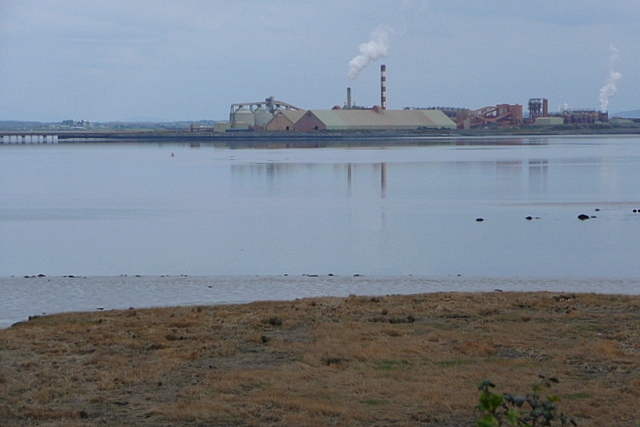
Alumina, a critical ingredient in aluminium production, is used in a wide range of applications, including toothpaste, lipstick, missiles, and drones. A Russian-owned facility in southern Ireland is Europe’s largest alumina refinery and frequently exports substantial volumes of the material directly to St. Petersburg and other Russian ports.
Nearly five years into the ongoing conflict following Moscow’s full-scale invasion of Ukraine, alumina remains exempt from the European sanctions implemented to weaken Russia’s economy. Consequently, the Aughinish refinery continues to supply its product to Russia, with experts indicating that a portion may be diverted for use in weaponry.
“The material is clearly ending up in military supplies,” said Irish lawmaker Ivana Bacik, who leads the opposition Labour Party. “It would be unthinkable for Ireland to be contributing, even in that indirect way, to Russia’s ‘war machine.“
Ireland has faced pressure to halt shipments of alumina as numerous European leaders convened in Dublin this week to discuss support for Ukraine. A summit of the 47-country European Political Community (EPC) took place on Thursday, followed by a meeting of European Union leaders on Friday. EU foreign policy chief Kaja Kallas said she would discuss alumina exports with Irish Foreign Minister Helen McEntee on Thursday to understand the current situation better.
Irish government minister Niall Collins told The Associated Press that “there’s absolutely no evidence” the material is ending up in military supply chains. However, the government has declined to make public the findings of its investigation into the alumina shipments.
Aughinish Alumina said in a statement its product “has no connection to the Russian military supply chain” and that it hired an independent company to provide monthly audits to Irish authorities for “enhanced traceability.”
Alumina is key to making missiles
Alumina is a chemical compound derived from bauxite, a red ore predominantly mined in Guinea, Australia, and China. This chalky white material can be smelted into aluminium, which is then alloyed with other, less common elements to produce strong, heat-resistant, and flexible alloys utilised in the manufacturing of missiles and aircraft. Additionally, aluminium is employed in the production of rocket fuel and explosives.
The Aughinish alumina plant, located in County Limerick, was established in the 1970s and was acquired in 2007 by Rusal, a Russian aluminium producer. Rusal was founded by Oleg Deripaska, a sanctioned oligarch linked to Russian President Vladimir Putin. According to reports from the US and Australian governments, Rusal accounts for nearly all aluminium production in Russia.
According to MarineTraffic data analysed by the Associated Press, a significant number of cargo ships depart from Aughinish for various locations across Europe and beyond, with a notable portion directed to the port of St. Petersburg.
The activist group Alumina 22 is advocating for sanctions on alumina trade with Russia. It estimates that approximately 491,307 metric tons of alumina from Ireland were shipped to Russia between March and October.
These shipments have gained prominence, particularly amid geopolitical developments. Following Russia’s full-scale invasion of Ukraine in 2022, two alumina factories—one in Australia and another in Ukraine—ceased exports to Russia, reducing supply by approximately 40%, as reported by the Economic Security Council of Ukraine (ESCU) in 2026. Currently, approximately 17% of Rusal’s alumina supply is sourced from Ireland, according to the ESCU.
An investigation by the Organised Crime and Corruption Reporting Project, in conjunction with the Irish Times, published earlier this year, found that alumina from Aughinish is processed in Russia to produce aluminium. A portion of this aluminium is subsequently sold to a metals trading company that supplies Russian defence contractors.
According to Olena Yurchenko, Director of Analytics, Research, and Investigations at ESCU, “Virtually everything that comes from Rusal is highly likely to end up in the hands of Russian military enterprises.”
Ukraine and EU countries call for sanctions on alumina exports to Russia
In June, during a visit to Dublin, Ukrainian President Volodymyr Zelenskyy remarked alongside Irish Prime Minister Micheál Martin, “Some European companies, owned or controlled by Russia and its sanctioned oligarchs, continue to supply the aggressor with essential materials.“
Martin acknowledged that “we do not want to be in a position where material emanating from a plant in Ireland goes to support the Russian war machine.” Ireland has not found evidence to support the current claims, nor has it found proof to refute them, as noted by Enterprise Minister Peter Burke, who supervises the enforcement of the country’s sanctions.
In July, Minister Burke said verifying Rusal’s assertion—that alumina from Ireland is used exclusively to produce aluminium for export to Russia—has proven difficult. While the Irish government has not made its findings public, it has submitted them to the European Commission, which drafts the EU sanctions packages.
EU sanctions envoy David O’Sullivan said there is little doubt that “the alumina goes to smelters in Russia who produce stuff which undoubtedly goes at least in part to the military-industrial complex.”
“I’ve read the government report. Personally, I think there’s no doubt the investigative journalists got it right,“ he said last month in Dublin at a meeting organised by the Institute of International and European Affairs.
In July, the European Parliament passed a non-binding motion advocating for a ban on alumina exports to Russia. However, alumina was not included in the EU’s 21st sanctions package against Russia that month. The European Commission, which proposes sanctions packages, is currently consulting with member countries on Irish alumina exports. Any sanctions must be approved unanimously by the bloc’s 27 countries. A Commission spokesperson said in July that the EU’s sanctions policy requires “a delicate balance“ between undermining Russia’s military efforts and minimising “negative impacts“ on EU member states, especially since alumina is considered a critical raw material. Irish Minister for European Affairs Thomas Byrne noted that the alumina issue “comes up regularly” in EU discussions.
“Ireland has been a staunch supporter of sanctions against the Russian Federation,“ he said Thursday. “The European Commission proposes sanctions, and there hasn’t been a proposal. If ever there were to be a proposal of that from the European Commission, Ireland would certainly consider it.”
Protecting jobs
Supporters of the Aughinish plant emphasise its importance in providing hundreds of jobs and serving as a key source of alumina for European countries, especially amid cargo traffic disruptions through the Strait of Hormuz due to the US-Israeli conflict with Iran.
Collins, a representative from County Limerick, affirmed Ireland’s strong support for Ukraine, noting that there is no evidence linking Aughinish to any harm. However, opposition politicians like Bacik from the Labour Party argue for temporarily nationalising the refinery, similar to actions taken during the 2008 financial crisis. She believes the refinery could stop exports to Russia and find new customers in Europe.
In Foynes, many residents have mixed feelings about the plant’s impact. Retired docker Joe Hanlon expressed concern about the potential loss of jobs, stating that “it’s too big a business to shut down,“ but acknowledged that intervention is necessary if Ireland aims to support Ukraine in the war.
This article used information from The Associated Press.
