
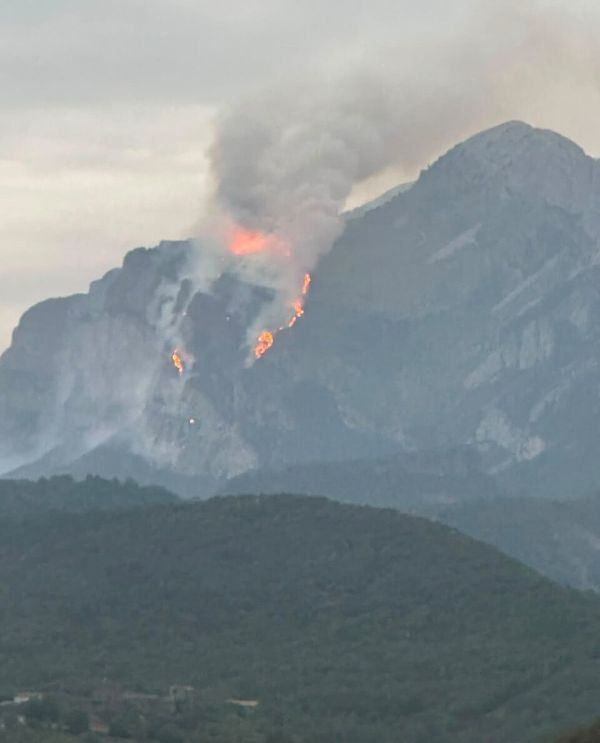
Europe is experiencing another summer of extreme heat. Record temperatures. Wildfires. Drought. And now exceptionally warm seas. Western Europe recorded its hottest June on record. Heat and drought are fuelling wildfires across the continent, while millions of people have been exposed to dangerous temperatures and communities are facing water shortages and growing strain on essential infrastructure. These pressures are not confined to Europe; countries across the wider OSCE region are also confronting the growing impacts of a changing climate.
Nevertheless, Europe is warming faster than any other continent and the consequences are no longer measured only in temperatures, but increasingly in human lives. More than 200,000 people in Europe have died as a result of heat over the past four years, according to the World Health Organization, while preliminary European mortality data indicate that the heatwave in June this year alone was associated with more than 16,000 excess deaths.
These are not abstract figures. Behind every number is a person, a family and a community. The human cost is already enormous. Heat kills. It damages our health, puts pressure on our infrastructure and threatens the resilience of our communities. We cannot simply accept this as inevitable.
The scale of this summer’s heat, fires and health impacts makes prevention and preparedness more important than ever. We need stronger heat-health action plans, better public warnings, measures to protect those most vulnerable to heat, and greater preparedness of health systems and emergency services.
In short, we have to do more before the next heatwave arrives. Prevention saves lives. Early warnings save lives. Prepared health systems save lives. We need policies that anticipate these risks, not simply respond to them after the damage is done.
Another, related, cause for concern is the increasingly severe impact of climate change on Europe’s seas. A new analysis by World Weather Attribution shows that some European waters are now up to 6°C warmer than normal, with climate change responsible for around two-thirds of the excess heat. In the western Mediterranean, marine heatwaves are affecting around 80 per cent of the region, while along the Bay of Biscay and Iberian coast the figure is around 90 per cent. Without human-caused warming, these affected areas would be roughly half as large.
For smaller countries and microstates, these consequences can be particularly serious. With limited territory and concentrated populations and economies, they often have less capacity to withstand repeated climate-related shocks. For many Mediterranean states, the sea is not simply part of the landscape. It is a source of food, employment, tourism and economic activity.
This is not only a challenge for microstates, but for Europe as a whole. Drought can threaten water and food supplies. Extreme heat can put pressure on health systems and energy infrastructure. Wildfires can destroy communities and critical infrastructure. Changes in marine ecosystems can undermine livelihoods and entire economic sectors. These risks are interconnected, and they do not stop at national borders.
The OSCE Parliamentary Assembly, where I serve as President, has made climate change a priority, with our efforts led by a Special Representative on Climate Change. The Assembly has kept climate-related security risks high on its agenda and promoted parliamentary co-operation on adaptation and mitigation. This work will continue, with a stronger focus on prevention, resilience and the links between climate, health and security.
We need action at every level. We must strengthen our capacity to adapt. We need better heat-health plans, stronger early-warning systems, resilient infrastructure and better water management. But adaptation is not enough. We must also reduce emissions and accelerate the transition to a low-carbon economy.
Parliaments, in particular, have a responsibility to ensure that climate commitments are translated into legislation, budgets and concrete measures. We need stronger international co-operation and greater access to financing, technology and expertise for countries and communities that have fewer resources and are more exposed to climate-related risks. In this regard, the OSCE also has an important role to play.
The OSCE region is diverse. Our countries are different in size, geography and economic capacity. But climate change does not recognize borders. A marine ecosystem does not stop at a national frontier. Wildfire smoke does not stop at a border. This is why we need co-operation. And this is why we need political will.
The international community cannot wait for the next temperature record or another devastating climate-related disaster before strengthening its response.
We should not wait for the next temperature record. We should not wait for another ecosystem to collapse. The warning is already here. We need better prevention. We need stronger preparedness. And we need policies that match the scale of the risks we are facing.

OSCE Parliamentary Assembly President Pere Joan Pons Sampietro
Pere Joan Pons is a member of parliament from Spain and serves as President of the OSCE Parliamentary Assembly.
