
The ocean is changing at an alarming pace, which has direct consequences for marine life, coastlines, and communities worldwide. This is the main conclusion of the tenth report on the state of the ocean, published on 30 September by the Marine Environment Monitoring Service of Copernicus, the EU Earth observation programme.
The European Commission report analyses data dating back to 1960 and shows that, due to rising temperatures, average sea level has increased by about 4.2 mm per year since 2012.
“The Ocean State Report once again highlights the scale and urgency of the challenges facing our ocean, as climate change continues to transform marine ecosystems and ocean circulation. These changes demand stronger knowledge, international cooperation and action,” said Andrius Kubilius, Commissioner for Defence and Space.
Key findings from this year’s report include:
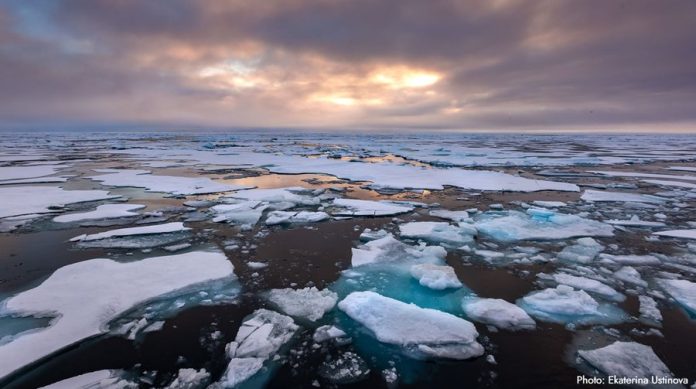
Significant Changes in the Arctic: The Arctic, a region of growing importance for climate security, economic resilience, and geopolitical stability, is experiencing some of the sharpest changes. The report highlights that the sea ice extent has decreased by roughly 490,000 km² per decade between 1979 and 2025, an area nearly as large as Spain. This loss has increased wind and wave activity, leaving about 60% of Arctic coastal infrastructure vulnerable to erosion and rising sea levels.
Intense Temperature Changes in European Seas: The Mediterranean and Black Seas have recorded marine heatwaves with temperatures exceeding 4.6 degrees Celsius above normal in 2024.
Increased Vulnerability for Coastal Communities: For Small Island Developing States, 65% of their combined Exclusive Economic Zones have experienced accelerating sea-level rise since 1999 due to ocean warming.
“The Ocean State Report proves the immense pressures our oceans face. From record-breaking marine heatwaves in the Mediterranean and Black Seas to accelerating sea-level rise and dramatic ice loss in the Arctic, the findings show that climate change is already reshaping marine ecosystems, coastal communities and the livelihoods that depend on them. For Europe, this is a call to strengthen our action to protect marine biodiversity, support resilient fisheries and coastal areas, and deepen our knowledge of the ocean,” stressed Costas Kadis, Commissioner for Fisheries and Oceans.
Through its Copernicus programme and the Ocean State Report, the EU provides reliable data to monitor ocean health and support measures that protect biodiversity, reduce pollution, and enhance resilience to climate change. The annual Copernicus report offers essential information on how changes in the ocean impact ecosystems, food security, economies, coastal communities, and global climate regulation.
