
On Monday, European Union countries expressed concerns regarding Russia’s efforts to extend negotiations aimed at resolving the ongoing conflict in Ukraine. They noted that Russia continues to target vital infrastructure, including power plants, which exacerbates the plight of civilians as winter approaches.
In response, the EU has implemented sanctions against nearly 50 Russian banks and financial institutions, along with several businesspeople linked to the energy sector and the trade in oil and petroleum products. Furthermore, asset freezes and travel bans have been enacted against numerous individuals accused of disseminating pro-Russian propaganda and disinformation.
During discussions in Brussels, EU foreign ministers underscored the importance of prioritising a ceasefire, followed by a genuine peace agreement. They reiterated that Russia, which initiated the nearly five-year conflict, bears responsibility for making necessary concessions, and they firmly rejected any new demands from the Russian side.
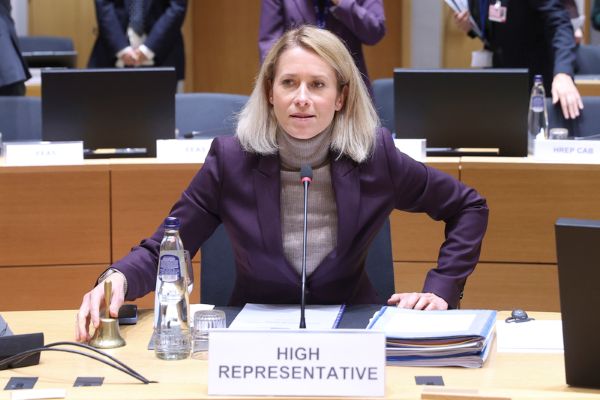
“We actually don’t have a ceasefire, and they continue to weaken Ukraine and kill people every single day,” EU foreign policy chief Kaja Kallas told reporters after chairing the meeting.
Recent negotiations held in Abu Dhabi have prompted the United States to encourage Ukraine and its allies to consider a Russian proposal for a new security framework for Europe, with the assertion that such an agreement could facilitate a pathway to peace. However, European leaders have expressed concerns, comparing this proposal to the “treaty” Russia presented to NATO before its full-scale invasion in 2022.
They view this demand as an attempt to undermine NATO’s integrity by requiring the alliance to reposition troops and military resources further westward, akin to the deployments that were in place before the accession of the Czech Republic, Hungary, and Poland in 1999.
Russia uses the same old tactics
“In 2021, Russia’s demands were a pretext for war. In 2026, they are a pretext for keeping the war going,” Kallas said. “Ministers were very clear today. We don’t need a new security architecture. We need to restore the one we have. Russia has broken all the treaties that underpin it.”
“Europe has a security architecture – we don’t need a new one, we just need respect from everyone for the existing security architecture,” said German Foreign Minister Johann Wadephul. He highlighted that it is “the foundation for any conceivable agreement, from the European point of view.”
Lithuanian Foreign Minister Kęstutis Budrys also insisted that Europe does not need another security framework, saying that Russia cannot be trusted and has already broken past agreements. “It’s very clear that we don’t need another one. We already have one. Secure Ukraine, strong Europe, strong trans-Atlantic bond,” he told reporters. “It’s not about the rules. Rules are working. The problem is that Russia is breaking them.”
Little progress in US-led talks
US negotiators Jared Kushner and Steve Witkoff have been mediating discussions with Russia and Ukraine for just over a year. However, no lasting ceasefire has been agreed upon, and little visible progress has been made towards peace. Significant disagreements remain regarding territorial control and future security arrangements.
European leaders, including Kallas, have expressed scepticism about these talks. The only tangible progress has been the exchange of prisoners, which warring parties often use as a trust-building measure during peace negotiations.
At a recent summit in Dublin, EU leaders decided that future discussions about Ukraine will involve security advisers from France, Germany, the UK, Italy, and Poland, along with senior EU officials. They acknowledged that, as Ukraine’s major supporters, they cannot serve as mediators. Instead, their focus will be on security arrangements, reconstruction, and ensuring that Ukraine maintains control over its sovereignty.
Kallas, the EU’s top diplomat, believes she should have been involved in the negotiations, as per the bloc’s treaties. Nevertheless, she remains hopeful that Europeans can now move past the debate over representation and concentrate on their demands from Russia and the best ways to support Ukraine.
This article used information from The Associated Press.
