
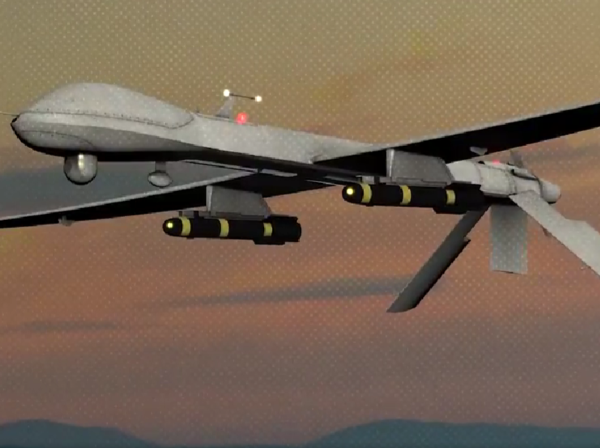
Killer robots and drones are set to be a focal point of discussion this week as government representatives convene to consider establishing regulations governing the use of these advanced weapons systems. Pope Leo XIV, the UN Secretary-General, and various advocacy organisations have framed this matter as an urgent, existential debate: Should autonomous robots be permitted to conduct lethal actions, and must humans retain oversight and accountability in deploying lethal autonomous weapon systems?
Activists point out that armed drones capable of independently identifying and attacking targets have already been employed in specific conflict zones, such as Ukraine and the Middle East, although their widespread implementation remains limited. Concerns surrounding potential scenarios, including the misuse of armed drones leading to civilian casualties, have contributed to ongoing discussions about the implications of deploying such technology. Unfortunately, these discussions have yet to yield any formal international restrictions.
The United States and Russia want to limit constraints on their ability to innovate and deploy cutting-edge military technologies, particularly in light of rapid advances in artificial intelligence that are transforming military operations.
Seven countries ask for a new agreement
The situation is reaching a critical point at the UN offices in Geneva, where the 7th Review Conference of the Convention on Certain Conventional Weapons is set to discuss the possibility of launching talks on regulating autonomous weapon systems, often referred to as “killer robots.” Proponents of a regulatory agreement recognise significant opposition; however, they cite historical precedents, such as the successful regulation of blinding lasers, which received broad international support.
UN Secretary-General António Guterres has emphasised the urgency of this matter by setting a deadline for discussions to begin this year. Despite this urgency, some major military powers remain reluctant to engage. In a recent development, seven countries—Austria, Belgium, Brazil, Ireland, Mexico, New Zealand, and Panama—have formally proposed initiating negotiations for a new legally binding agreement on autonomous weapons at the upcoming conference.
Stakeholders are bracing for a potential diplomatic impasse. On Friday, Mirjana Spoljaric, President of the International Committee of the Red Cross, remarked, “States must act to ensure that the future of warfare is not handed over to machines.” The advocacy organisation Stop Killer Robots has reported that 130 countries support establishing new international regulations governing these weapon systems. Furthermore, activists have commenced public awareness campaigns in major cities, including Berlin, London, and Paris, to highlight support for addressing the challenges posed by autonomous weaponry.
Russia says talks on restrictions are ‘premature’
In his first encyclical in May, the pope criticised a “culture of power” driving the AI arms race and stated it is unacceptable to allow remote AI systems to make life-and-death decisions.
UN human rights chief Volker Türk urged nations to urgently agree on binding regulations for lethal autonomous weapons systems, emphasising the need for the international community to make pivotal choices about the future of armed conflicts and human decision-making in the use of force.
Decisions under the convention require consensus, meaning any country can block agreements, often resulting in lower standards. There are also concerns about how long negotiators will have to reach a consensus.
Ahead of this week’s conference, humanitarian groups warned that Russia might attempt to stall negotiations.
Russian Foreign Ministry spokesperson Maria Zakharova said Moscow prioritises a successful conference outcome to strengthen the Inhumane Weapons Convention but believes it’s too early to discuss restrictive measures.
This article used information from The Associated Press.
