
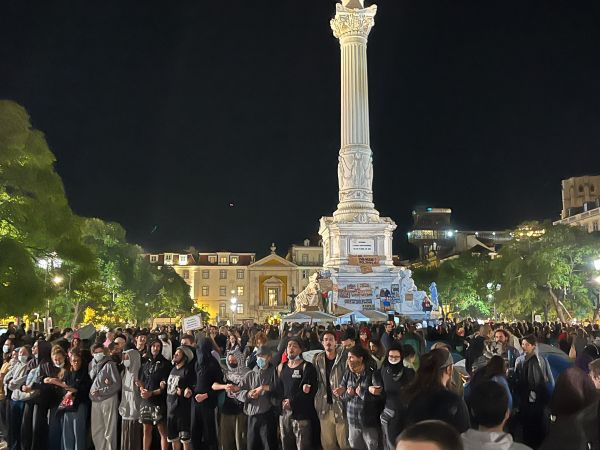
On Saturday, tens of thousands of people took part in demonstrations across more than 30 cities and towns in Portugal, marking the largest protest to date against rising housing costs. Many participants said rising costs have made home purchases and rentals unattainable.
The housing crisis has led to several weeks of sustained demonstrations, with some activists occupying central squares in Lisbon and Porto, the country’s two largest cities. Instances of riot police employing dispersal tactics, including the use of dogs, have drawn criticism regarding excessive force.
These protests were inspired by recent demonstrations in neighbouring Spain, which have highlighted similar housing issues. This movement occurs amid widespread social unrest in Europe this autumn.
Under the rallying cry “We won’t let them steal our right to housing,” a diverse group of participants, ranging from teenagers to retirees, came together. The march in Lisbon was marked by drums, music, and chants, with protesters displaying large banners and flags.
Susana Pacheco, a 35-year-old data analyst who also practices astrology part-time to help with her mortgage, expressed concern for the younger generation, particularly about her sister’s ability to move out of their family home. “I am genuinely worried about young people,” she stated. “I have serious doubts about how they will afford their own homes.”
Ana Encarnação, 42, echoed these sentiments, describing the intolerable rise in living costs and the growing disparity between the wealthy and the less fortunate.
Activists are advocating for measures such as caps on rent increases, stronger legal protections for tenants against eviction, and more affordable housing options.
Recent statistics indicate that housing prices in Portugal have risen far faster than income growth. Between 2015 and 2025, Portugal saw the largest increase in the home price-to-income ratio in the European Union, rising 61%, while the Netherlands followed at 34%, according to Eurostat, the EU’s statistical agency.
Moreover, the National Statistics Institute reported nearly a 20% increase in housing prices from the first quarter of last year to the first quarter of 2026. Rental prices have also surged, with a 68% increase recorded since 2020.
The interplay of foreign buyers and investment funds has also driven rising property prices, as they purchase real estate throughout Portugal. The appealing mild climate and extensive coastline have attracted digital nomads, remote workers, and retirees. Furthermore, the tourism sector has flourished, leading to the conversion of numerous city centre apartments into short-term rental properties.
In response to these challenges, the government has initiated measures such as lowering taxes on new construction, imposing restrictions on short-term rentals, and committing to building 145,000 new homes. However, the government acknowledges that the impact of these initiatives will not be immediate.
Portuguese President António José Seguro, while primarily holding a ceremonial role, has convened a Council of State—a consultative body—to address the protests and has met with demonstrators to discuss these pressing issues.
This article used information from The Associated Press.
