
The European Union’s flagship Green Deal, which requires the bloc to achieve climate neutrality by 2050, is coming under more and more pressure as the influence of Europe’s far-right political forces grows.
Major setbacks suffered by green-aligned parties in last year’s European Parliament elections, plus a general voter shift away from environmental concerns, have left the 27-nation EU bloc having to reconsider and recalibrate its environmental strategy.
Earlier this month, the EU’s executive arm had to suspend negotiations on legislation aimed at curtailing “greenwashing”, a practice companies deploy (or decoy) to suggest ecological responsibility.
Ahead of yesterday’s leadership summit in Brussels, the European Commission put work on the so-called Green Claims Directive, a measure intended to make environmental claims more transparent and reliable across the EU, on hold.
First proposed in March 2023, the directive was intended to require companies to have their environmental claims verified by independent third parties and to regulate the use of eco-labels across the bloc. The aim was to build up consumer trust and to offset misleading marketing.
Now the European Commission is claiming that, as currently drafted, the legislation is too cumbersome for small businesses to implement.
According to Commission chief spokesperson Paula Pinho, nearly 30 million micro-businesses (some 96% of all businesses in the EU) would be affected by the measure. Unless the proposal is revised, the executive could be compelled to withdraw it, she indicated.
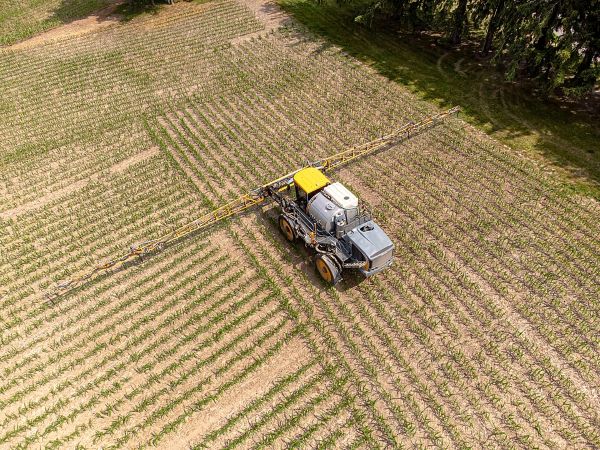
This latest setback comes after farmers across Europe last year opposed and resisted strict nature and agricultural regulations linked to EU plans to achieve climate-neutral status by 2050.
The 2019 Green Deal set out sweeping reforms covering energy, transport, agriculture, buildings and industry as part of Commission President Ursula von der Leyen’s first-term mandate. Swelling public indignation and the rise of the far-right in member states and in the European Parliament since then have made their mark, forcing the Commission to moderate some of its environmental goals.
For example, in order to ease farmer concerns amplified by populist campaigns, the Commission shelved a proposal to reduce pesticide use and weakened the Nature Restoration Law, which had sought to establish binding targets to restore degraded ecosystems.
Researchers from the Stockholm Environment Institute fear priorities could shift even further, given that the emphasis on the EU’s competitiveness and clean industry “is currently taking precedence over environmental objectives.”
Both the European Parliament and the European Council adopted their respective positions on the Green Claims directive earlier this year but the final negotiations, begun in January, were halted last week, with the Council calling off the closing round of talks.
The European Commission maintains that 53% of green claims are vague, misleading or unfounded and that 40% are not backed by evidence.
“Today’s victims are European consumers and companies that are truly sustainable,” MEP Tiemo Wölken, co-rapporteur for the measure, declared.
Centre and leftist MEPs have been sharply critical of the Commission, accusing it of having backed off under pressure from the centre-right European People’s Party (EPP), the right-wing European Conservatives and Reformists (ECR) group, and the far-right Patriots for Europe (PfE).
How the Commission’s decision will affect Ursula von der Leyen’s ability to pass future reforms if her EPP political family can no longer work with the Socialists and Liberals, who supported her in her first term, remains unclear.
Valérie Hayer, chair of Renew, a liberal centrist European Parliament group, said the EPP’s request to withdraw the proposal was “unacceptable”, adding that the Commission’s response had been disgraceful.
“Stopping negotiations and requesting a withdrawal in the middle of the process is an unprecedented institutional scandal,” she said. “What is the value of a word once it has been given?”
