
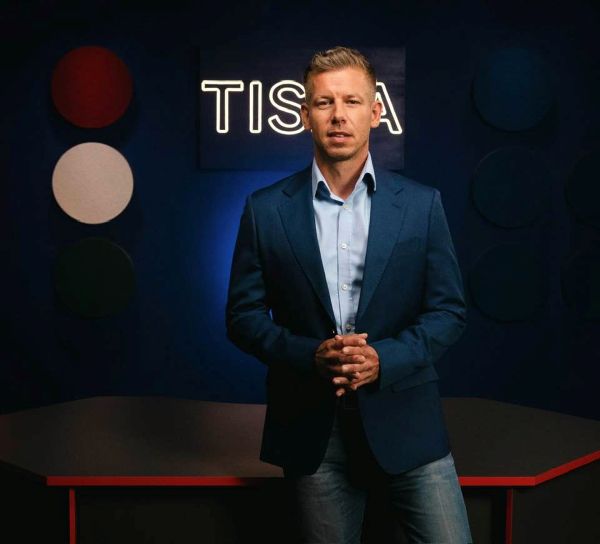
Hungarian opposition leader Péter Magyar has publicly addressed the issue of foreign interference in Hungary’s political processes, urging Russia to refrain from such activities. This statement followed allegations made by Moscow, asserting that the European Union is attempting to orchestrate the overthrow of Prime Minister Viktor Orbán.
Magyar emphasised the importance of Hungary’s sovereignty in his message, demanding a firm assurance from Russia against involvement in internal political matters. He stated, “I request a clear commitment from the Russian Federation to avoid any actions that may be perceived as interference in Hungary’s internal political processes, including disinformation campaigns, cyber operations, or intimidation of politicians and citizens.”
His remarks were a reaction to claims from the Russian Foreign Intelligence Service (SVR) on 13 August, which suggested that the European Commission’s objective is to alter the regime in Budapest and support Magyar as an opposition figure.
The SVR asserted that “significant material, administrative, media, and lobbying resources have already been mobilised in support of Magyar.” The Russian intelligence also claimed that “Kiev has actively joined the campaign to destabilise the Hungarian government at the request of Brussels.”
Magyar denounced these allegations as unacceptable interference in Hungary’s democratic processes, underscoring the essential principle that Hungary’s sovereignty resides solely with its citizens. He articulated the need for public explanations from the Russian embassy and explicit guarantees regarding the non-recurrence of such actions. He further noted that the integrity of democratic processes is a fundamental prerequisite for bilateral cooperation between nations.
As a prominent challenger to Prime Minister Orbán, Magyar has pledged to reorient Hungary’s foreign policy and alleviate the country’s isolation from Western allies. The Orbán government has faced criticism for perceived erosion of democratic norms, including its reluctance to support European Union military aid to Ukraine and its close ties with Russian President Vladimir Putin.
Member states of the European Union have veto power over various decisions, including those related to the EU enlargement and foreign policy.
The next parliamentary elections in Hungary are scheduled for 2026. As the leader of the Tisza Party, Magyar has commenced his election campaign, expressing confidence in his party’s prospects of succeeding against Orbán. In light of these developments, Orbán has intensified his information campaign, utilising various media platforms to portray Magyar as being akin to Ukraine’s President Volodymyr Zelenskyy and suggesting he is a product of external influences.
Polls in Hungary indicate that ruling Fidesz is behind Tisza by more than 10 points.
