
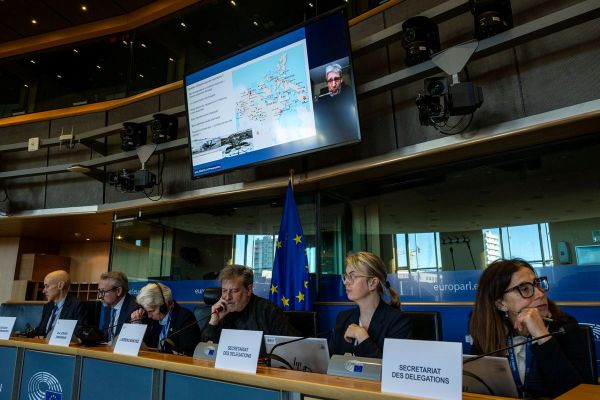
On Wednesday, the Foreign Affairs Committee of the European Parliament adopted a recommendation with a vote of 47 in favour, 13 against, and 5 abstentions. The Committee emphasised the need for enhanced cooperation between the European Union and Canada to address security challenges and promote trade amid escalating geopolitical tensions.
The committee members urged EU institutions to capitalise on current disruptions to the international order to strengthen the strategic partnership between the EU and Canada, focusing on shared interests and values.
Furthermore, the Members of the European Parliament (MEPs) advocated the prompt implementation of the outcomes of the EU-Canada Summit held on June 23, 2025, to ensure meaningful progress on the joint statement and the security and defence partnership.
Boost joint security, defence and Ukraine support
The Committee advocates for enhanced collaboration with Canada to effectively address a range of security threats, including Russia’s war against Ukraine, hybrid warfare, terrorism, foreign interference, assertive actions by China and economic coercion, climate change, advancements in artificial intelligence, cybersecurity issues, and instability in the Middle East.
There is a strong emphasis on the necessity of fully implementing the security and defence partnership, which complements NATO’s initiatives, such as Security Action for Europe (SAFE) and the ReArm Europe Plan/Defence Readiness 2030. Furthermore, the EU and Canada are encouraged to strengthen their support for Ukraine’s sovereignty and territorial integrity, particularly through the G7 and the Coalition of the Willing, while also coordinating sanctions and diplomatic efforts to isolate Russia further. Joint efforts should also be made to enhance relations with the United States.
Additionally, the Committee calls for increased coordination to address the challenges posed by China, particularly in the Western Balkans and through stronger engagement in the Indo-Pacific. Collaborative actions towards achieving a just and lasting peace in the Middle East are also emphasised.
Defend multilateralism and increase trade
MEPs stress the importance of defending multilateralism and preserving key institutions, including the United Nations, the International Criminal Court, the World Trade Organisation, NATO, and the G7 and G20 forums.
The Committee advocates for deeper cooperation in the Arctic, expressing concerns regarding the militarisation of the region. There is also a call for joint initiatives to safeguard Greenland’s autonomy amid rising geopolitical interest.
Moreover, the text highlights the importance of promoting the benefits of the Comprehensive Economic and Trade Agreement (CETA), strengthening energy cooperation—particularly through an expanded high-level energy dialogue—and urges the remaining member states to ratify CETA ahead of the 2027 anniversary of its provisional application.
“Canada is perhaps the most European country outside Europe. At a moment of global rupture, marked by Russian aggression and increasingly erratic rhetoric from Washington, it is time for this close alignment to be matched by the depth of our Euro-Canadian alliance,” said rapporteur Tobias Cremer (S&D, Germany).
“United by shared geopolitical interests, democratic values, and a common commitment to renewing the international order, Europe and Canada must seize this historic opportunity. This report sets out a clear roadmap to elevate our partnership, by moving our cooperation in defence, support for Ukraine, Arctic security, trade, cybersecurity, AI, energy, and climate to a new level,” he added.
This recommendation will be presented to the Plenary for a vote at an upcoming plenary session.
