
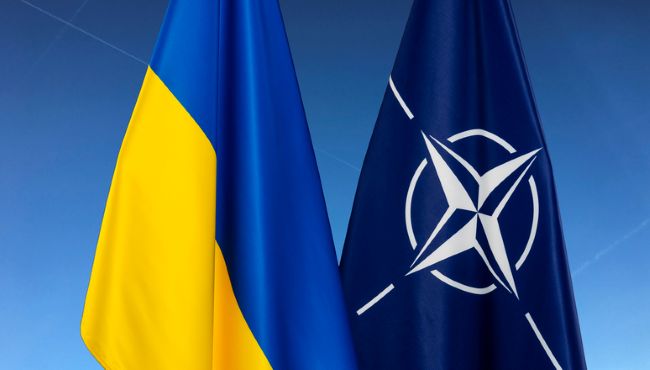
While Ukraine might not be able to regain all of its territory, it was unlikely that Russia would defeat the country as a whole, NATO Supreme Allied Commander General Christopher Cavioli, head of the U.S. European Command, told the U.S. Senate Armed Services Committee in Washington yesterday.
True, Kyiv remained dependent on the U.S. to meet its needs for a sophisticated air defence system, he said. Still, it had made progress in its recruitment drive to overcome troop shortages in battling the Russian invasion, and it was diversifying its armaments supply chain, with European countries now providing half of its ammunition requirements. He also noted that Ukrainian forces had managed to “destroy” as many as 4,000 Russian tanks.
Nonetheless, Russia is a chronic and growing threat to NATO, the general said, as he cautioned that withdrawing support for Ukraine could have serious consequences. Despite losses it incurred, the Russian military had been able to expand its forces “faster than analysts predicted”, Cavioli said. He described Russia as ready and willing “to use military force to achieve its geopolitical goals” as it pursues “a destabilisation campaign in Europe and beyond”.
Cavioli, whose term as head of the U.S. European Command and Supreme Allied Commander Europe (SACEUR) ends this summer, said that while he would like European forces to form the core of the defence of NATO’s eastern flank in the long run, this was unlikely now or in the near future since countries like those of the Baltic States were too small to ensure their own security.
U.S. forces currently have capabilities no one else has, he noted. Those capabilities are required “in places where they can be trained and ready, and where they have the infrastructure and the political agreements, the international agreements, to deploy them quickly.”
Cavioli acknowledged that the Trump administration’s plan to end the dual role of commander of U.S. forces in Europe and Supreme Commander of Nato forces (SACEUR) came with potential “challenges”. The U.S. had “always guaranteed NATO a certain amount of nuclear forces” for use by the SACEUR “in a conflict, with the consent of the United States and other countries”. However, that understanding was applied “when under the command and control of SACEUR.” Therefore, if the SACEUR “were not an American officer, we would have to find another way to do it”.
