
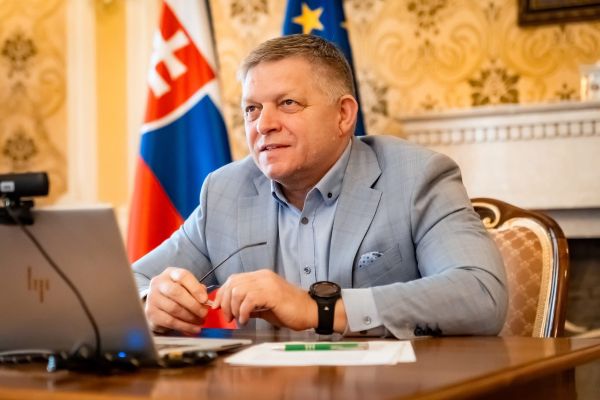
Slovaks are set to participate in a referendum on Saturday to determine whether to abolish lifelong payments for right-wing populist Prime Minister Robert Fico and other leaders upon the conclusion of their terms in office. Voters will also consider the reinstatement of the offices of the special prosecutor and the National Criminal Agency, both of which are responsible for addressing significant crime and corruption.
This referendum follows a petition initiated by the Democrats. This non-parliamentary, pro-Western opposition party successfully gathered over 350,000 citizen signatures in a country of 5.4 million, meeting the legal threshold for such a vote. Historically, only one referendum in Slovakia—the 2003 vote concerning the country’s accession to the European Union—has been successful, while previous attempts have failed due to insufficient voter turnout. However, current projections suggest that participation in this referendum may not reach the necessary 50%.
Under existing regulations, Slovak prime ministers and parliament speakers who have served at least two terms are entitled to receive lifelong payments equivalent to the monthly salaries of lawmakers. These payments were established following an assassination attempt on Fico in 2024, when he was shot and seriously injured after a government meeting, an incident that had a profound impact on the country and resonated across Europe. Before 2024, this benefit was available solely to former presidents.
Earlier in 2024, the Slovak legislature approved a proposal from Fico’s coalition government to abolish the office of the special prosecutor, which oversees serious crimes such as corruption, organised crime, and extremism. Concurrently, the government disbanded the police unit responsible for tackling these issues. This legislation has faced considerable criticism both within Slovakia and internationally, leading to widespread protests from citizens.
Additionally, several individuals linked to Fico’s party have faced prosecution for corruption scandals. Since his return to power in 2023, Fico has emerged as a contentious figure, with his pro-Russian policies prompting significant public opposition. Notably, he has announced his intention not to participate in the upcoming referendum.
This article used information from The Associated Press.
