
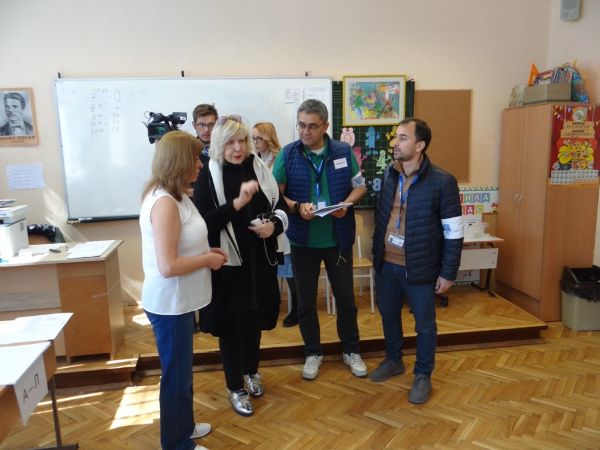
Bulgaria’s early parliamentary elections on April 19 saw increased voter participation and were conducted with transparency and efficiency. However, international observers noted gaps in the legislative framework, including a last-minute amendment regarding the number of polling stations abroad, which affected electoral stability and inclusiveness.
More than 100 observers from ODIHR monitored the voting process in Bulgaria’s parliamentary elections, from the opening of polling stations to the counting of votes, across the country.
“The process we have observed offered voters a genuine choice, but in an atmosphere of significant political polarisation and campaign rhetoric that was often negative,” said Dunja Mijatović, Head of the election observation mission from the OSCE Office for Democratic Institutions and Human Rights (ODIHR). “Fundamental freedoms were respected and the process was generally well administered. At the same time, work remains to be done, including in addressing issues such as alleged vote-buying, disinformation, and limited transparency in many aspects of the campaign.”
Despite ongoing political instability, authorities implemented measures to protect electoral integrity, addressing allegations of vote buying and intimidation. While fundamental freedoms were generally respected, the campaign was polarised and marked by negative rhetoric. Online campaigning played a significant role in voter engagement but also spread disinformation, particularly about government activities. Key campaign issues included energy, foreign policy, corruption, the rising cost of living, and the rule of law.
The legal framework is adequate for democratic elections. Yet several ODIHR and Council of Europe recommendations remain unaddressed, particularly regarding candidate residency, electoral violations, and the enhancement of women’s and minorities’ participation. The media landscape, although pluralistic, faces issues such as self-censorship and limited analytical reporting, which impact voters’ access to unbiased information.
Election day was generally calm, with most polling stations operating smoothly, although some procedural shortcomings were noted. Women remain underrepresented in politics, and only a few parties address women’s participation in their campaigns. Instances of gender-based attacks and smear campaigns, including those involving AI-generated content, were reported. Despite the challenges, more than half of the campaign events featured women as prominent speakers.
The existing legal framework for party and campaign finance lacks oversight, with no regulations on third-party campaigning and online political advertising. Dispute-resolution mechanisms exist, but restrictive legal provisions have limited effective redress and undermined due process.
“After years of political instability and repeated returns to the polls, Bulgarian citizens defied logic and voted in strong numbers to give the country a chance for stable government,” said Chris Said (Malta, EPP/CD), Head of the delegation of the Parliamentary Assembly of the Council of Europe (PACE). “The responsibility now lies with Bulgaria’s political leaders to respect that message and turn this vote into effective and credible governance.”
