
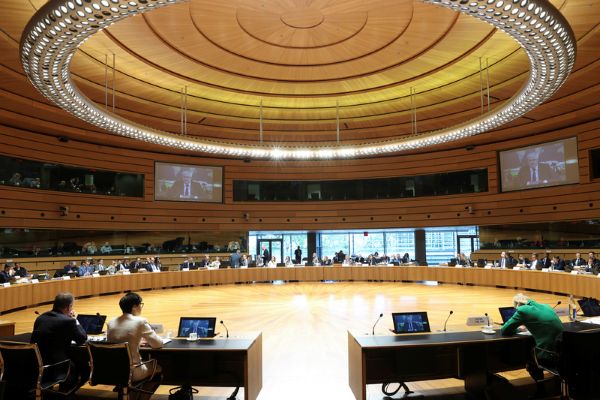
Ambassadors from EU member states reached a preliminary agreement on Wednesday regarding a €90 billion loan to support Ukraine’s military and financial needs over the next two years, as well as the introduction of a twentieth package of sanctions against Russia, according to the Cypriot presidency of the EU. The written procedure for the final adoption of these measures, enabled by the lifting of the Hungarian veto, is expected to be completed on Thursday, as stated by the presidency.
Hungary has agreed to move forward with these steps but has consistently conditioned its final approval on the resumption of Russian oil deliveries through the Druzhba pipeline, which crosses Ukraine. However, Kyiv announced that this pipeline was put back into operation on Wednesday.
President Volodymyr Zelenskyy announced that repairs on the Druzhba pipeline, damaged by a Russian strike, are complete and that it can resume operation. However, outgoing Hungarian Prime Minister Viktor Orbán has indicated that he will approve the loans only once oil flows again. Orbán lost an election on 12 April and is set to leave office next month.
Cyprus, which currently holds the EU’s rotating presidency, plans to initiate a written procedure to finalise the loan package. This requires Hungary or any opposing nation to provide a written explanation for their objections. The process may be open for 24 hours or more, allowing for final approval at the EU leaders’ summit in Cyprus on Thursday.
EU foreign policy chief Kaja Kallas was cautious about speculating on an agreement’s outcome when asked by reporters on Tuesday, stating, “We expect an agreement within 24 hours, so I don’t want to jinx it.”
The EU initially intended to use frozen Russian assets as collateral for a loan to Ukraine, but this option was blocked by Belgium. In December 2025, all EU leaders, including Viktor Orbán, agreed to the loan. The Czech Republic, Hungary, and Slovakia had consented to allow their EU partners to borrow funds, as long as they were not obligated to participate. However, Budapest subsequently blocked the decision to advance payments to Kyiv, escalating tensions within the EU.
Cyprus announced it would present the loan for consideration on Wednesday, but the issue of sanctions was added just before the meeting. Both the loan and the new sanctions against Russia require unanimous consent, which Hungary has stalled. Slovakia also opposed the latest sanctions package. The new package includes a complete ban on the transport of Russian oil by sea.
Orbán’s defeat raised hopes for a shift in Hungary’s policy concerning Ukraine under future Prime Minister Péter Magyar. The EU will finance a €90 billion loan for Ukraine—€30 billion for budget support and €60 billion for defence, with debt repayment deferred until Russia pays reparations. Interest will be covered by member states, excluding Hungary, Slovakia and the Czech Republic. Military equipment may also be sourced from non-EU countries.
This article used information from The Associated Press.
