
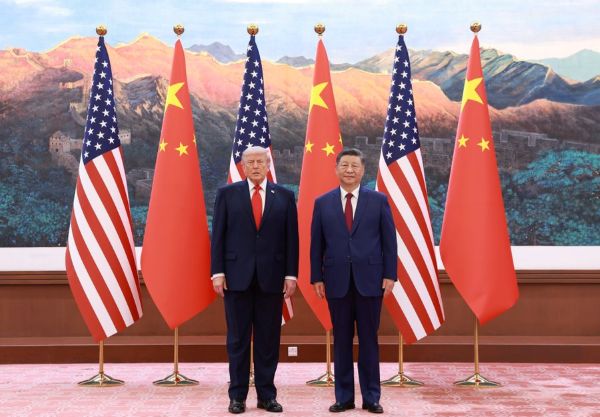
China and the US concluded their first bilateral meeting in years without reaching any conclusions on some of the thorniest issues in their relationship, such as the reopening of the Strait of Hormuz or Taiwan.
US President Donald Trump visited China and met with Xi Jinping in a highly anticipated meeting. Trump spoke highly of Xi, and both leaders released an optimistic statement about the meeting.
However, beneath the surface, differences persisted. Trump told Fox News that Xi offered help to resolve the situation in the Strait of Hormuz and said at the end of the meeting that both he and Xi don’t want Iran to have nuclear weapons. Beijing was indeed the strait to reopen, and American officials said that Xi opposes tolls to vessels trying to pass through the strait.
China is Iran’s main trade partner, but so far it has steered clear of directly intervening to mend Tehran. The US State Department even accused Chinese firms of giving Iran satellite images to the Iranian government. China criticised the US and Israel’s intervention, but so far, the impact on the Chinese economy has not been huge. However, a prolonged conflict may also impact them.
On Taiwan, the balance of power between the two superpowers is even more skewed. China didn’t budge at all in its position that sees Taiwan simply as a runaway Chinese territory. In recent weeks, Beijing has underlined this view in preparation for the meeting with the US.
The US government, on the other hand, reaffirmed its position of support in Taiwan, with US Secretary of State Marco Rubio saying that “they always raise it on their side. We always make clear our position, and we move on to the other topics,” downplaying the importance it may have in the relationship between the two countries.
Recently, Trump demanded that Taiwan bolster its defence spending and signed a $11 billion weapons deal with the island, but so far, the US has not fulfilled the sale. Trump has been ambivalent on the island, asking that they pay the US to ensure protection and insinuating that Taiwan stole the semiconductor business from the US.
This article used information from The Associated Press.
