
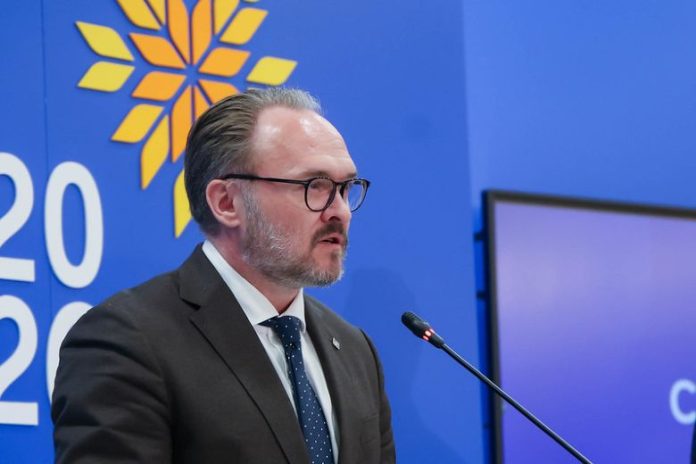
On Wednesday, the European Union’s energy commissioner provided an update regarding the current status of jet fuel supplies. While he noted that there is no immediate threat to these supplies, he stressed that a longer-term shortage cannot be discounted.
Commissioner Dan Jørgensen indicated that the potential for disruption depends on the evolving circumstances surrounding the Iran conflict and the situation in the Strait of Hormuz, as well as airlines’ responses, particularly in light of recent significant flight cancellations, including those by Lufthansa’s parent company.
Ongoing hostilities in the Strait of Hormuz, through which approximately one-fifth of the world’s oil typically transits, have led to supply disruptions and higher global fuel prices. While Commissioner Jørgensen assured that we are not currently facing a jet fuel shortage, he said the EU’s executive body will initiate discussions with member states to determine the most effective strategies to address the situation, though specific details were not provided.
Since late February, the price of jet fuel has more than doubled in certain markets due to the Iran conflict, posing a particular risk to airlines, as fuel costs constitute a significant portion of their operating costs. Last month, International Energy Agency Chief Fatih Birol informed The Associated Press that Europe might have only “maybe six weeks or so” of remaining jet fuel supplies. He also cautioned that flight cancellations could occur “soon” if oil supplies remain hindered by the ongoing conflict.
Commissioner Jørgensen underscored the EU’s increased expenditure—amounting to an additional 35 billion euros for the same quantity of fuel since the onset of the conflict—which highlights the imperative to transition away from fossil fuels. He remarked, “This is not merely an energy crisis; it is a crisis of fossil fuels.” He further noted that, despite the EU’s efforts to diversify energy sources, enhance energy efficiency, and increase reliance on renewable energy since the 2022 Russian invasion of Ukraine, reliance on fossil fuels persists.
Michael Damianos, the energy minister of Cyprus, which currently holds the EU’s rotating presidency, confirmed that fossil fuels, including natural gas, will likely remain an integral part of the EU’s energy mix for the foreseeable future. Nevertheless, he emphasised the firm commitment to achieving a 90% reduction in greenhouse gas emissions by 2040. He also indicated that natural gas from deposits discovered off Cyprus’ southern coast could enter European markets by late next year or early 2028.
In conclusion, Commissioner Jørgensen reiterated the EU’s firm commitment to reduce greenhouse gas emissions expeditiously, stating, “The climate crisis will not dissipate.” Looking ahead, he mentioned ongoing dialogues with Gulf nations to explore how energy flows from the region can be restored following a negotiated peace with Iran. Last month, both EU Council President António Costa and EU Commission President Ursula von der Leyen reaffirmed the bloc’s readiness to collaborate with Persian Gulf countries on new initiatives to facilitate energy delivery to global markets, ensuring that such deliveries would remain insulated from war and geopolitical tensions.
This article used information from The Associated Press.
