
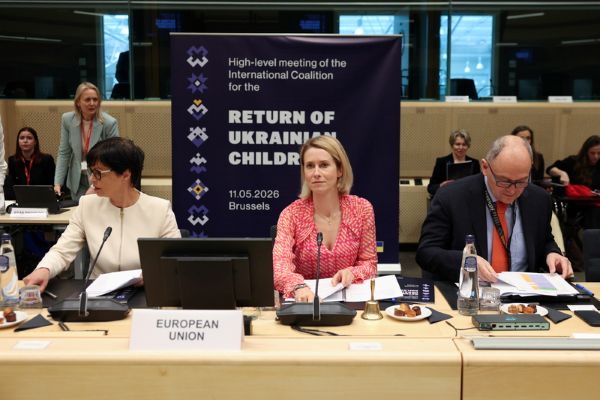
On Monday, the European Union sanctioned 16 officials accused of aiding Russia in the abduction of tens of thousands of Ukrainian children. Many of these children have been forced to change their identities or put up for adoption. The EU also targeted seven centres believed to be indoctrinating these children or training them for military service, either for Russia or pro-Russian militias.
Currently, over 130 individuals and entities are subject to EU travel bans and asset freezes related to these abductions. Since Russia’s full-scale invasion of Ukraine in early 2022, around 20,500 children have been unlawfully deported or forcibly transferred to Russia or Russian-controlled areas. Many are stripped of their Ukrainian identities, given Russian passports, and indoctrinated in military camps or schools.
Latvian Foreign Minister Baiba Braže highlighted the gravity of the situation, linking it to the Genocide Convention. The International Criminal Court has issued an arrest warrant for Russian President Vladimir Putin for his alleged war crimes, including these abductions. Though approximately 2,200 children have been returned, identifying them is challenging, especially for those taken at a young age.
The EU, alongside Canada, hosted a meeting of the International Coalition for the Return of Ukrainian Children to increase diplomatic pressure on Russia and support efforts to verify and trace those who have been taken. EU Enlargement Commissioner Marta Kos condemned the abductions, stating, “Stealing children is one of the most horrific acts of war.”
Among those sanctioned was Lilya Shvetsova, head of the “Red Carnation” camp in occupied Crimea, who was found to be involved in activities aimed at shaping the political views of Ukrainian children.
This article used information from The Associated Press.
