
A recent report evaluating the EU’s Common Security and Defence Policy highlights the necessity for enhanced European efforts, cooperation, and solidarity. Prepared by the Committee on Security and Defence of the European Parliament, the report expresses significant concern about Russia’s ongoing aggression, which has undermined Europe’s security order and exposed failures in associated institutional and political processes.
The Members of the European Parliament (MEPs) emphasise that lasting security can only be achieved through collaboration among all nations based on mutually agreed-upon rules. MEPs advocate for the development of a renewed European security architecture that both reinforces the transatlantic link in harmony with the EU’s strategic interests and enhances cooperation with NATO. Furthermore, they stress the importance of member states being prepared to act autonomously based on the European Union’s mutual assistance clause, Article 42(7) of the Treaty on European Union (TEU).
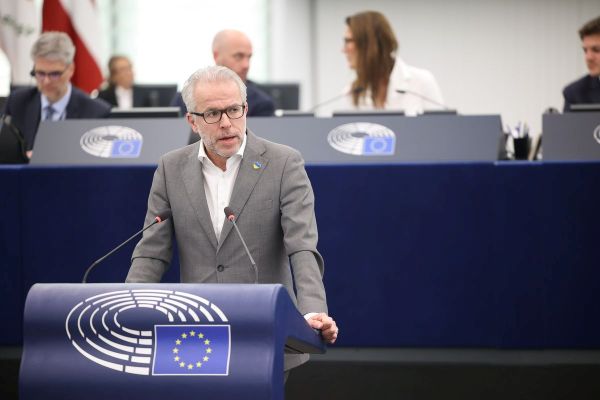
The rapporteur, Thijs Reuten (S&D, Netherlands), said that “Russia’s war of aggression against Ukraine and its ongoing hybrid attacks and conventional threats against Europe, combined with US policy ambivalence, means that Europe’s security is at a critical juncture.”
“I am particularly happy that on Ukraine, the report has clear language on security guarantees and includes calls to explore an Air Protection Zone, and urges strengthening and deepening the support to and cooperation with Ukraine, including through a reparations loan,“ the rapporteur added.
While acknowledging the existing uncertainty in the EU-U.S. defence and security relationship, MEPs recognise the United States as the EU’s most crucial strategic ally and an essential component of NATO’s collective defence framework. They encourage closer EU-U.S. cooperation while underscoring the importance of European allies in establishing a robust European pillar within NATO. MEPs believe that the strengthening of this pillar should align with the operationalisation of Article 42(7) TEU to ensure synergies and complementarity.
Moreover, the report highlights the need for coherence between the EU’s mutual defence clause and NATO’s equivalents, ensuring that it provides a credible layer of European security and defence, is fully aligned with NATO, and complements national initiatives. MEPs commend the recent substantial increases in defence spending by EU member states, while urging for further collective efforts to avoid ongoing market fragmentation.
The report also addresses the existing deterrence gaps within the EU, emphasising the urgency of addressing these gaps in light of the rapidly changing geopolitical landscape. It calls for EU countries to reassess their military doctrines, replenish depleted stockpiles, enhance industrial defence production, improve interoperability by minimising overlapping weapon systems, promote standardisation in accordance with NATO standards, and significantly increase investment in innovation.
MEPs assert that Russia remains the primary and most significant threat to the European Union and its member states, particularly in conjunction with its allies, including Belarus, Iran, and North Korea. They reaffirm their unwavering support for Ukraine’s sovereignty and territorial integrity, arguing that Ukraine’s success is the most effective and cost-efficient investment in European security in the short and medium term.
The report advocates increased efforts to support Ukraine and its defence industry, while incorporating Kyiv’s insights into asymmetric and hybrid warfare, drones, ballistic missiles, electronic warfare, and air defence. The document was approved by a vote of 23 in favour, nine against, and three abstentions. It will be submitted to a vote in the European Parliament as a whole, anticipated to take place during the January 2026 session.
