
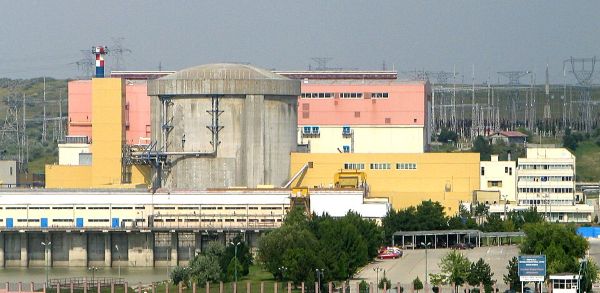
The European Commission is conducting an in-depth investigation to assess whether Romania’s planned public support for refurbishing and extending the lifetime of Unit 1 at the Cernavoda nuclear power plant aligns with EU State aid rules.
Romania notified the Commission in January 2026 of its plan to support the refurbishment of Unit 1, which has a generation capacity of 706 megawatts and began commercial operation in 1996. This extension is crucial as the reactor’s estimated lifespan ends in 2027, aiming to ensure a long-term supply of low-carbon electricity and enhance Romania’s energy security.
The estimated cost of the project is €3.2 billion, with support mechanisms including a €600 million grant, state-guaranteed loans, a 30-year contract for difference (CfD) to ensure stable revenue, and protection against regulatory changes.
While the Commission finds the project necessary, it has concerns regarding compliance with EU State aid rules, focusing on:
Appropriateness of the aid package: Ensuring that the aid granted is no more than necessary while balancing investment risks and incentives for efficient behaviour.
Market competition impact: Potential inefficiencies in the CfD design may not provide adequate operational incentives.
Compliance with EU law: Assessing adherence to Article 19d(2) of the Electricity Regulation regarding the CfD.
The investigation allows Romania and interested parties to comment, but does not predict the outcome.
Under the Treaty on the Functioning of the EU (TFEU), Member States can choose their energy mix, including nuclear energy. State aid for nuclear energy is evaluated under Article 107(3)(c) TFEU, ensuring it is necessary and does not negatively affect trade. Starting July 2024, the European Commission will also assess compliance with new electricity market design rules regarding two-way CfDs.
