
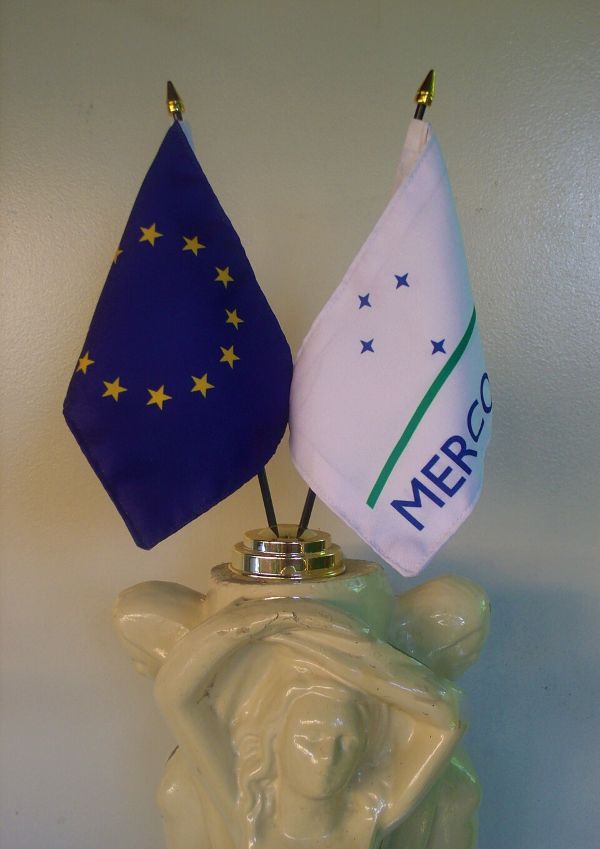
A historic free trade agreement between the European Union and four South American countries is set to enter into force on 1 May, following over 25 years of negotiations. This agreement is being implemented amid heightened global economic uncertainty, driven by factors including tariffs, restrictions on critical minerals, and the ongoing conflict in Iran.
On Monday, the European Commission confirmed that the effective date for the EU-Mercosur free trade agreement has been established after receiving a formal communication from Paraguay affirming its approval of the pact. This agreement is integral to the European Union’s strategic efforts to diminish economic dependence on both China and the United States.
The legislatures of Uruguay, Brazil, Paraguay, and Argentina have all successfully ratified the agreement, which connects more than 700 million people and represents 25% of global gross domestic product (GDP). Notably, Bolivia, the most recent member of Mercosur, did not participate in the initial negotiations; however, it will be eligible to join the agreement in the coming years.
“The priority now is turning this EU-Mercosur agreement into concrete outcomes, giving EU exporters the platform they need to seize new opportunities for trade, growth and jobs,” said European trade commissioner Maroš Šefčovič.
The opposition from farmers and environmentalists significantly delayed the agreement in December. Subsequently, the deal faced another obstacle when EU lawmakers voted to refer it to the bloc’s judiciary. In light of this development, the EU executive decided to enact the agreement, provisionally bypassing the European Parliament. Consequently, trade is expected to commence in May and will only be suspended if the European Court of Justice rules against it.
French President Emmanuel Macron characterised this action as “a bad surprise.” France and Poland have been at the forefront of efforts to halt or adjust the deal, advocating for clauses that protect consumers and agricultural producers.
Nonetheless, European Commission President Ursula von der Leyen has dismissed these concerns, emphasising that the agreement is crucial for the EU’s resilience in an increasingly complex global landscape.
“This is about resilience, this is about growth, and Europe shaping its own future,” she told a news conference in February. Recently, she has not taken questions about the issue.
Ursula von der Leyen is in Australia this week for discussions on a potential free trade agreement, defence cooperation, and critical mineral supplies.
This article used information from The Associated Press.
