
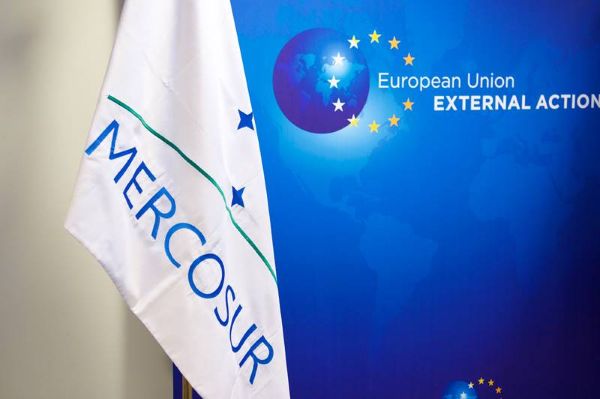
The European Council’s approval of the trade deal between the European Union and its South American equivalent, Mercosur, is already being hailed as historic and a turning point for both blocs.
The deal is yet to be ratified by the European Parliament, but it should pass after it reaches the necessary majority in the Council. France decided not to vote for it, followed by Poland, but Italy changed its stance on the deal, and in the end, the qualified majority was reached.
The major criticism of the deal from the European perspective is the fear of an invasion of agricultural products from South America, which would sweep away already struggling European farmers. Farmers across Europe swarmed various capitals in protest, but the EU stood out for the deal, adding more safeguards on crop and livestock imports and quotas. The sway doubters, it also promised around 47 billion euros in subsidies for farmers.
The EU was interested in concluding the deal, which has been in the making for almost 25 years, to open new markets for its products and prevent the Chinese car industry from becoming hegemonic in South America. Negotiations went back and forth between the two organisations with frequent pauses and backtracking. It received new impetus thanks to the turbulent last year, as US President Donald Trump‘s push for tariffs made the EU and Mercosur interested in diversifying their trade. The deal will create a massive new free-trade zone, accounting for almost a quarter of global gross domestic product.
South American countries also share similar interests and see the newly struck deal as pivotal for growth. Some analysts even consider it the re-opening of Argentina and Brazil to the broader world. Both countries went through decades of protectionist policies. Argentinian ranchers hailed the deal as it will open new lucrative markets. The importance of the deal was not lost even to populist libertarian President Javier Milei. At first, Milei considered leaving Mercosur, but later changed his mind and now sees the bloc as a tool to boost Argentina’s exports.
This article used information from The Associated Press.
