
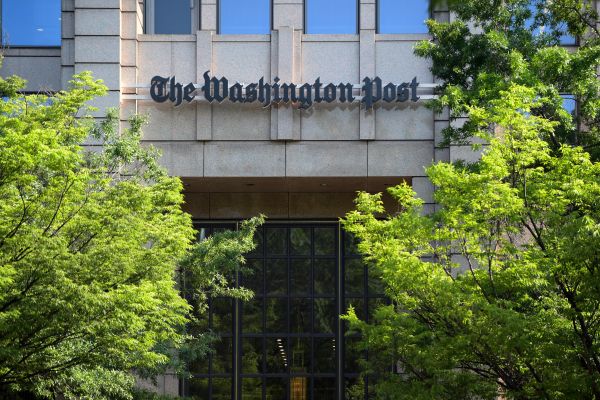
Wednesday’s raid on the home of Washington Post reporter Hannah Natanson has set off widespread alarms about the extent to which the Trump administration seems willing to ignore press freedom norms when going after journalists and media critical of US President Donald Trump. As noted by The Associated Press media correspondent David Bauder, the Trump administration could hardly have chosen a more compelling target than Natanson, dubbed “the federal government whisperer” for her relentless reporting about changes within the US federal s workforce since President Donald Trump’s return to the White House.
A phone, two laptops and a Garmin watch were seized in the search of Natanson’s Virginia home, according to the Post, whose executive editor Matt Murray, in an email to staff, said the warrant authorising the raid was issued in connection with an investigation into a government contractor accused of illegally retaining classified government materials. Officials told Murray that neither the Post nor Natanson were a target of the investigation. Murray called the raid an “extraordinary, aggressive action”, one that was “deeply concerning and raises profound questions and concern around the constitutional protections for our work.”
The warrant says the search was related to an investigation into a system engineer and information technology specialist for a government contractor in Maryland who authorities allege took home classified materials, the Post reported. The worker, Aurelio Perez-Lugones, is accused of printing classified and sensitive reports at work, and some were found at his Maryland home, according to court papers.
US Attorney General Pam Bondi said that the search followed a request by the US Defence Department and that Natanson had been “obtaining and reporting classified and illegally leaked information from a Pentagon contractor.” In April, Bondi issued new guidelines saying prosecutors would again have the authority to use subpoenas, court orders and search warrants to hunt for government officials who make “unauthorised disclosures” to journalists.
Jameel Jaffer, head of Columbia University’s Knight First Amendment Institute, an expert on press freedom issues, said he couldn’t recall when the last government raid had been carried out on a journalist’s home.
“I strongly suspect that the search is meant to deter not just that reporter but other reporters from pursuing stories that are reliant on government whistleblowers,” he said, noting that “it’s also meant to deter whistleblowers.”
Some news outlets have also taken steps to be more aligned with the administration, Jaffer said, citing CBS News since its corporate ownership changed last summer. The Washington Post has shifted its historically liberal opinion pages to the right under owner Jeff Bezos.
Just before Christmas, Natanson wrote an article about how having been contacted by 1,169 people after posting her contact information last February on a forum that US government personnel were using to discuss how changes the Trump administration had initiated were impacting the federal workforce. Much of the Post’s coverage of what was going on in federal agencies came as a result of those tips, she noted. She cited one instance where a woman living alone had messaged her on Signal that she planned to die “that weekend” but first “wanted at least one person to understand: Trump had unraveled the government, and with it, her life.”
This week’s raid amounted to “a growing assault on independent reporting and undermines the First Amendment,” said Tim Richardson, PEN America’s journalism and disinformation programme director. He too, like Jaffer, is convinced the raid was intended to intimidate.
Under a 1917 law, it is illegal for journalists to possess classified information, Jaffer pointed out, yet questions remain as to whether that law conflicts with First Amendment protections for journalists. For example, when The New York Times published a secret government report on US involvement in Vietnam in 1971, it was not enforced. “It’s the government’s prerogative to pursue leakers of classified material,“ the Post said in an editorial. “Yet journalists have First Amendment rights to gather and publish such secrets, and the Post also has a history of fighting for those freedoms.“
Other actions taken against the media in the course of the Trump administration include lawsuits against The New York Times and the BBC. At the same time, many news outlets have stopped reporting from within the Pentagon, having refused to sign on to new rules restricting their coverage set by Defence Secretary Pete Hegseth. Meanwhile, funding for public broadcasting has been restricted or reduced, given Trump’s belief that its news coverage leaned to the left.
Moves have also rescinded a Biden administration policy that protected journalists from having their phone records secretly seized during leak investigations.
This article used information from The Associated Press.
