
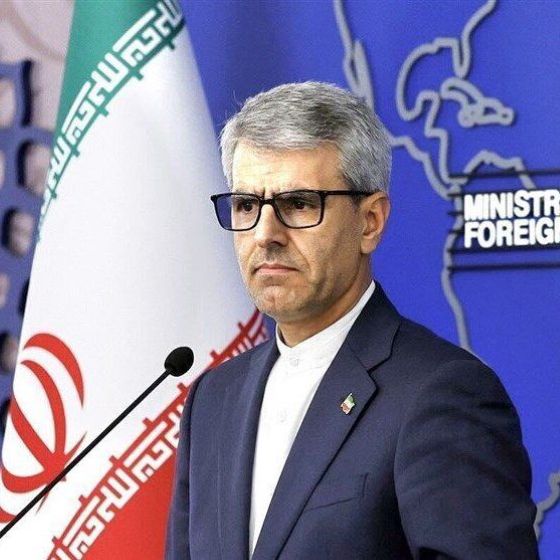
On Monday, Iran summoned all European Union ambassadors to protest the EU’s designation of the Islamic Revolutionary Guard Corps (IRGC) as a terrorist organisation. This escalates tensions as Iran faces potential US military intervention over reports of killings of peaceful demonstrators and concerns about mass executions. In response, the US has deployed the USS Abraham Lincoln and guided missile destroyers to the Middle East, while regional nations seek diplomatic solutions to avoid further conflict.
“Trump is trying to calibrate a response to Iran’s mass killing of protesters that punishes Iranian leaders without also embroiling the United States in a new, open-ended conflict in the region,” the New York-based Soufan Centre think tank said Monday.
“Some Trump aides seek to exploit Tehran’s weakness to secure major concessions from the regime, but Trump has set conditions for a diplomatic resolution that Tehran cannot accept.”
EU sanctions caused Iran’s anger
The European Union has designated the IRGC as a terrorist organisation due to its involvement in a violent crackdown on January protests that resulted in thousands of deaths and detentions. The US and Canada have made similar designations. This move, while largely symbolic, adds economic pressure on Iran, as the Guard significantly influences the country’s economy.
Iranian Foreign Ministry spokesman Esmail Baghaei stated that the summoning of ambassadors began over the weekend, with preparations for retaliatory actions underway. He said a decision by Iran on the EU’s actions is expected soon. Additionally, Iran’s parliamentary speaker announced that all EU military forces are now considered terrorist groups, referencing a 2019 law.
The Guard emerged from Iran’s 1979 Islamic Revolution to protect the government led by Shiite clerics and was later enshrined in the constitution. It gained power during the Iran-Iraq War in the 1980s, and after the war, Supreme Leader Ayatollah Ali Khamenei allowed it to expand into private enterprises.
The Guard’s Basij force played a key role in suppressing protests that intensified on 8 January, when authorities cut off internet and international phone access. Videos from Iran show individuals, believed to be Guard members, shooting at and beating protesters.
Guard continues drill in Strait of Hormuz
Baghaei announced that a drill by the Iranian Revolutionary Guard in the Strait of Hormuz is “ongoing according to its timetable.” Iran had previously warned ships about the drill scheduled for Sunday and Monday, but had not confirmed its occurrence until now. The US Central Command issued a strong warning against harassment of its warships or interference with commercial vessels.
Satellite images taken on Sunday showed small vessels moving quickly in the strait between Iran’s Qeshm and Hengam islands. The Revolutionary Guard primarily relies on small, fast-attack ships in this region. When asked about the potential for war, Baghaei reassured the public, saying, “Don’t worry at all,” but he did not comment on whether Donald Trump had set a deadline for Iran to respond to US demands.
This article used information from The Associated Press.
