
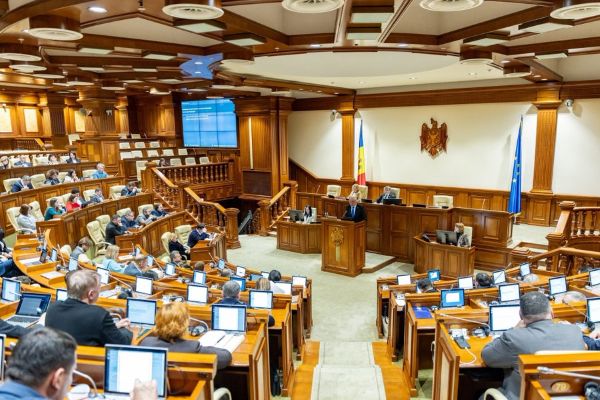
On Tuesday, the Parliament of Moldova voted to declare a state of emergency in the country’s energy sector following recent Russian strikes on Ukraine’s energy grid, which led to the disconnection of a crucial power line linking Moldova to Romania.
Prime Minister Alexandru Munteanu communicated via X, “In light of the attacks on the Isaccea–Vulcănești energy infrastructure by Russia, we have enacted a 60-day state of emergency in the energy sector. The risks we face are significant; however, the Government of Moldova is responding promptly to safeguard our citizens, ensure the continuity of essential services, and maintain stability.”
The overnight strikes led to the disconnection of the high-voltage Isaccea-Vulcănești power line, which connects southern Moldova with Romania, an EU member state. In response, Moldovan authorities have urged citizens to consume electricity judiciously during peak hours while repairs are conducted. The emergency measure received overwhelming support, with 72 votes in favour and none against, although 18 lawmakers abstained.
Prime Minister Munteanu remarked, “The current challenges in the energy sector are not coincidental. Russia’s assaults on the civilian energy infrastructure of Ukraine constitute a war crime and represent a direct threat to the Republic of Moldova. Russia bears full responsibility for these actions.”
The state of emergency began on Wednesday, granting authorities the ability to mobilise additional resources, protect critical infrastructure, and implement measures to mitigate the crisis’s impact. Munteanu further stated, “We remain vigilant and committed to the safety of every citizen. This declaration is not a reaction of panic; rather, it is a responsible measure.”
It is important to note that Moldova’s energy systems, largely inherited from the Soviet era, remain interlinked with Ukraine’s. The country has experienced intermittent outages since the start of Russia’s full-scale invasion of Ukraine in 2022. Energy Minister Dorin Junghietu has estimated that repairs to the damaged power line may take between 5 and 7 days.
Moscow’s continued targeting of Ukraine’s civilian infrastructure, including dams and river ports, has had ramifications across borders. The effects of the ongoing conflict have been particularly pronounced in Moldova, a former Soviet republic that currently holds EU candidate status. Most recently, the Moldovan population faced water shortages after a Russian strike on a Ukrainian hydroelectric plant contaminated a major river that flows into Moldova. This facility, located approximately 15 kilometres upstream from Moldova’s northern border, provides water to nearly 80% of Moldova’s population.
Additionally, in January, Moldova experienced significant power outages, including in the capital city, Chisinau, following a disruption to a power line from Ukraine that resulted in a voltage drop.
President Maia Sandu explicitly criticised Moscow’s actions on Tuesday, stating that “Russia continues to systematically undermine the security of the Republic of Moldova and jeopardise the well-being of our citizens.” She further noted on Facebook, “After the bombing of the Ukrainian hydroelectric power plant, the latest assault has led to the disconnection of the Isaccea-Vulcănești line, which supplies 60-70% of our electricity during certain periods. These incidents are not mere coincidences; they reflect deliberate actions by Russia intended to weaken Moldova and leave us in the dark.” Russia has consistently denied any intention to destabilise Moldova.
This article used information from The Associated Press.
