
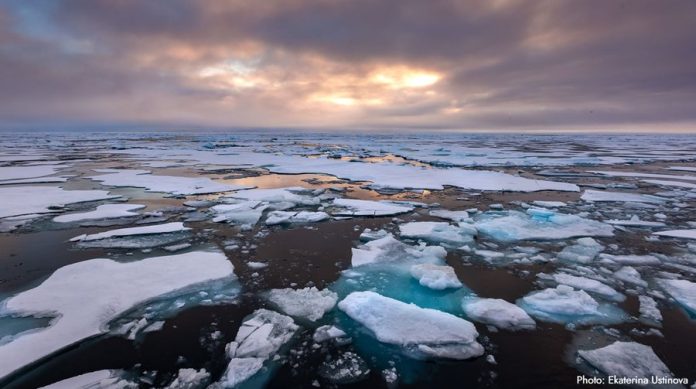
NATO is considering an “Arctic Circle” mission approach to ease tensions between Denmark and the United States over the growing Greenland dispute. The proposed plan would bolster surveillance and defence in the region to counter any stepped up Russian and Chinese activity as melting Arctic ice gives way to new sea lanes. European nations would be responsible for air and sea patrols in the region, while Washington could increase the US troop presence in Greenland under existing treaty terms. NATO ambassadors aired the approach in Brussels on 8 January, when discussing recent White House assertions about a possible takeover of the autonomous Danish territory. This move did not rule out a military intervention.
The idea derives from similar NATO missions launched in 2025 – the first, the so-called “Baltic Sentry” operation in response to a spate of undersea sabotage that occurred in northern European waters. The “Eastern Sentry” was next, following a major Russian drone incursion into Poland. Both of these ongoing “sentry” operations are rated successful and effective, according to anonymous NATO officials who spoke to Radio Free Europe. Whether the approach can be emulated if applied to the Greenland situation is another question. However, Belgian Defence Minister Theo Francken has publicly endorsed the idea, while London and Berlin are warming to the possibility.
The Brussels gathering was unanimous that NATO needs to step up in the Arctic region. As one European diplomat put it: “Canada has been screaming about the need to up the game in the High North for years, so Washington is hardly the first one to bring this up.” Seven of the eight so-called Arctic countries are NATO members, and all are aware that while the waters around Greenland are not full of Russian and Chinese ships right now, that could change given the speed with which the Arctic ice is melting and how this is opening up new sea lanes.
At a recent military conference in Sweden, the NATO supreme allied commander and senior US general in Europe, Alexus Grynkewich, noted how Russian and Chinese vessels in the region are “out there doing bathymetric surveys and trying to figure out how they can counter NATO capabilities on and under the sea.” That, he cautioned, is “something that could grow very quickly, and we need to be mindful of it and ready.” Grynkewich did add that a NATO mission at this time would be “premature”. Earlier this week in Berlin, Germany’s Defence Minister Boris Pistorius noted that any such undertaking is still months away.
However, these cautionary notes notwithstanding, NATO Secretary-General Mark Rutte has been in discussions with Washington about how the alliance might step up. Meanwhile, European diplomats have suggested that an “Arctic Sentry” initiative could defuse the argument that the US needs to have Greenland and establish that Europe is capable of handling two flanks at the same time – Russia in the east and potentially Russia and China in the Arctic.
“In many ways it’s about burden-sharing here as well”, one diplomat said, noting that one potential scenario could involve Europeans handling air and sea surveillance. At the same time, the US increases its troop
presence in Greenland. The US currently has some 200 officers there on one base, charged with looking after ballistic missile early warnings and space surveillance. During the Cold War, up to 10,000 US troops were stationed on the island, spread across 17 bases.
European countries could guard the airspace and also the water of what is known as the “the GIUK gap,” the vast area between Greenland on one side and Ireland and the UK on the other. Practical obstacles do exist, not least the size and make-up of the substantial fleet that would be required to cover the GIUK gap. Nations deemed likely to contribute include the UK and France, with the addition of naval assets from Denmark, Italy, Norway, the Netherlands, and Spain. As for troops, apart from the Nordic countries and Canada, few troops have experience of operating in the harsh Arctic conditions.
NATO defence chiefs are expected to discuss the issues and possibilities in greater detail when they meet in Brussels on 21-22 January, and they are sure to feature on the agenda again when NATO defence ministers assemble there on 12 February.
