
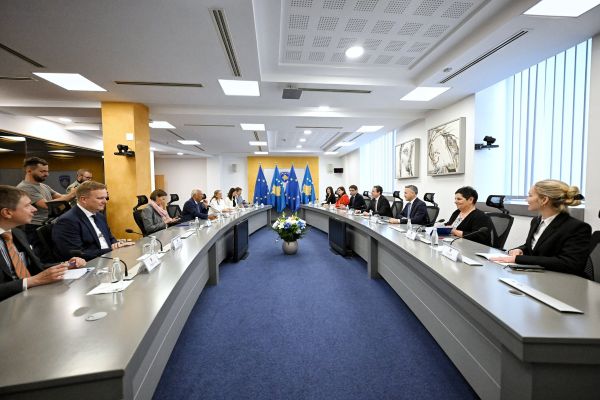
Kosovo is scheduled to hold its third parliamentary election in 18 months this weekend, amid growing concerns about a persistent political impasse as it seeks closer alignment with the European Union and NATO. The early parliamentary vote on Sunday was necessitated by the inability of Kosovo’s primary political parties to reach an agreement on a successor to former President Vjosa Osmani, whose term concluded in late March.
Prime Minister Albin Kurti‘s centre-left Vetevendosje party has maintained a clear majority in the parliament following the early election in December. However, the appointment of the president requires support from at least 80 lawmakers in the 120-member Parliament, a threshold neither Prime Minister Kurti nor the opposition has met.
The ongoing blame game among key political figures over the crisis has left Kosovo’s approximately 2 million voters disappointed, eager for the government to prioritise economic development and improve living standards.
Businesswoman Vlora Kryeziu from the capital city, Pristina, articulated this frustration, noting, “The same scenario is being repeated.” At 52, Kryeziu expressed her dissatisfaction and emphasised that society needs to take more substantial action to effect change.
The first inconclusive election in February 2025 led to a prolonged period without a functioning government, ultimately necessitating a subsequent election in December. Kosovo is one of the youngest and economically challenged countries in Europe. The predominantly ethnic Albanian country declared independence from Serbia in 2008 following a conflict from 1998 to 1999, which was concluded by NATO intervention that compelled Serbia to withdraw.
While Kosovo has received recognition from the United States and most EU member states, it remains unrecognised by Serbia and its allies, including Russia and China. Both Pristina and Belgrade have been urged to repair their relations to advance their EU membership applications. Recently, European Council President António Costa called for Kosovo to resolve the ongoing political stalemate and to unite in its efforts to achieve EU integration.
“The European Union can support Kosovo, but it cannot do Kosovo’s own homework,” he said in Pristina. “Kosovo needs strong, stable and functioning institutions capable of delivering reforms and seizing the opportunities the European Union offers.”
Prime Minister Albin Kurti is urging voters to give him another chance in Sunday’s election. He accused opposition parties of creating an “artificial crisis” and forcing repeated elections, despite the public’s clear will. In response, the Democratic Party of Kosovo and the Democratic League of Kosovo have accused Kurti of trying to monopolise political institutions. Former President Vjosa Osmani is running on the LDK party list against Kurti after he declined to support her for a second term.
Political analyst Artan Muhaxhiri does not expect a significant change from the last election, where Kurti’s party won over 50% of the vote. He believes the existing political deadlock will persist, as leaders show no willingness to shift their positions. This ongoing crisis has negatively affected Kosovo’s economy and delayed access to EU and international funds.
This article used information from The Associated Press.
