
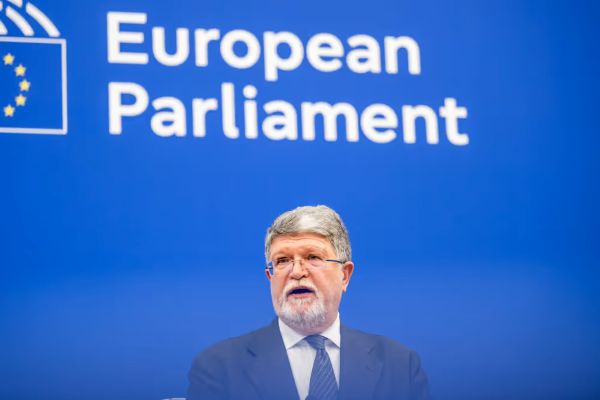
This week, the European Parliament discussed a report on Serbia’s prospects for EU accession. The Serbian government continues to assert that EU membership is its strategic objective; however, Members of the European Parliament (MEPs) have cautioned that this commitment is not consistently reflected in governmental actions. The prevailing authoritarian governance under President Aleksandar Vučić has led to restrictions on freedoms and violations of the rule of law. Additionally, there are concerns surrounding Serbia’s increasing alignment with Russia and China, which appears to diverge from its aspirations to join the EU.
Progress towards EU membership necessitates not only the adoption of reforms but also their comprehensive and diligent implementation.
MEPs expressed this concern by voting on a report on Serbia, which received 468 votes in favour, 116 against, and 79 abstentions. The report highlights a significant gap between Serbia’s legislative alignment with EU regulations and the effective execution of reforms, which continues to impede the country’s advancement.
Furthermore, MEPs emphasised that each country’s trajectory toward EU integration must be assessed on its own merits, and that no country should be treated as part of a collective package.
“My report concludes that Serbia’s EU accession process has effectively stalled, due to democratic backsliding, weakened rule of law, failure to implement key reforms and lack of alignment with EU foreign policy. Despite continually reaffirming its strategic commitment, Serbia’s political leadership has so far demonstrated limited political will to undertake reforms or to align with the values and policies required for accession,” said rapporteur Tonino Picula (S&D, Croatia).
About Serbia’s EU accession negotiations, MEPs argued that these discussions should proceed only upon demonstrable and sustainable progress in critical areas, including the rule of law, free and fair elections, the combat against corruption and organised crime, judicial independence, media freedom, public administration reform, and the enhanced functionality of democratic institutions.
MEPs expressed concern about what they deemed an “appeasing approach” towards Serbia, urging the European Commission to adjust financial support in light of significant setbacks in the pace and quality of reforms. They also reiterated that the normalisation of relations with Kosovo is a prerequisite for EU support within the framework of the reform and growth agenda.
In discussing Serbia’s relations with Russia and China, MEPs expressed disapproval of the country’s close ties with these countries and of the escalating security and defence cooperation with China, which raises pertinent questions about Serbia’s strategic orientation. They underscored that full alignment with the EU’s common foreign and security policy, including compliance with the EU’s sanctions against Russia, remains an essential condition for accession.
Regarding the current political situation in Serbia, MEPs noted a diminished level of public support for EU membership, largely due to a longstanding anti-EU narrative propagated by government-controlled media and statements from high-ranking Serbian officials. They called for the EU to enhance its collaboration with Serbian non-governmental organisations to strengthen democratic resilience and combat hybrid threats.
In light of the ongoing political crisis in Serbia, marked by widespread protests since November 2024, MEPs asserted that resolving this crisis would best be achieved through genuinely free and fair elections.
