
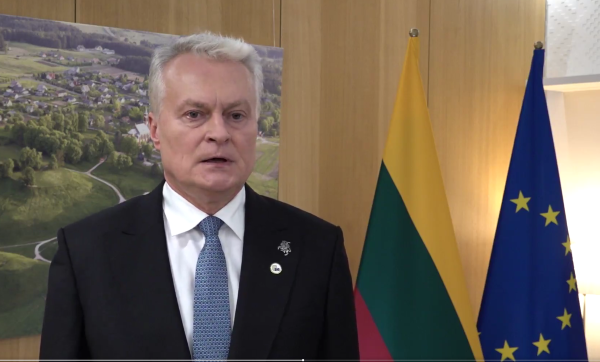
Lithuania’s president announced on Wednesday that intelligence suggests Russia may plan attacks on critical infrastructure in the Baltic states and Poland. President Gitanas Nausėda indicated that authorities are monitoring risks to energy and transport systems, particularly those linked to the European electricity grid.
“There is information regarding limited operations likely targeting critical infrastructure,” Nausėda told the BNS news agency, though he noted that specific locations and timings for these potential attacks remain unclear.
Russia dismissed these claims as excuses to justify NATO’s military buildup in the region.
Latvian President Edgars Rinkēvičs warned that Russia might engage in provocations against NATO as Ukraine pressures Moscow. He emphasised that the next 12 months will be vital for Baltic security.
In recent months, Lithuania, Latvia, Estonia, and Poland have strengthened security around key infrastructure in response to Russian threats. Polish authorities reported intercepting Russian aircraft over the Baltic Sea conducting surveillance of their air defence systems.
Kremlin spokesman Dmitry Peskov said the Lithuanian warnings were scare tactics intended to promote militarisation and create an enemy image to justify NATO’s military presence in the Baltics.
Poland sent similar warnings
Nauseda’s remarks align with recent warnings from Polish politicians about the potential for limited military or hybrid provocations by Russia against Poland. In late June, the prominent Polish news outlet onet.pl reported that US intelligence had informed Polish officials of the possibility of a Russian attack. The report indicated potential scenarios, including attacks on critical infrastructure, incursions by Russian soldiers near border areas, and drone operations.
On 3 July, Prime Minister Donald Tusk underscored the importance of taking these warnings seriously, noting that he had been communicating similar concerns for several weeks.
“Poland is preparing very intensively for various scenarios,” Tusk stated. “While I do not wish to incite fear, the coming months may prove critical, particularly in light of the evolving situation in Ukraine.”
He also emphasised that concerns are especially pronounced in the Baltic states, stating, “We are not afraid; we are preparing for various scenarios, but we mustn’t take this lightly. We are acutely aware of the dangers, particularly based on information received from our allies.”
Foreign Minister Radosław Sikorski conveyed a direct message to Russian President Vladimir Putin: “We are aware of your plans. Please refrain from pursuing them.”
Countries deploy additional forces in infrastructure protection
General Raimundas Vaikšnoras, Lithuania’s Chief of Defence, confirmed the deployment of additional military forces to protect strategic infrastructure against potential Russian provocations. He noted that Russia’s rhetoric aimed at the Baltic states and Poland seeks to undermine public trust in state institutions and the military.
Following a November attack on its rail system attributed to Russia, Poland has ramped up security for key infrastructure. The European Union recently reported that Russia’s FSB Centre 16 was involved in cyberespionage and sabotage against defence industries in Europe, including a December attack on a Polish power plant that serves nearly 500,000 customers.
A report from the International Institute for Strategic Studies indicated that Russia possibly used shadow ships to launch drones that disrupted civilian aviation between 2024 and 2026. The Baltic region is also facing issues with stray Ukrainian drones as Ukraine attacks Baltic Sea ports used for Russian energy exports.
In mid-May, Latvian Prime Minister Evika Siliņa resigned due to the government’s handling of incidents involving stray Ukrainian drones. In late May, Lithuanians in Vilnius sought shelter in underground parking garages as authorities warned of unidentified drone activity.
This article used information from The Associated Press.
