
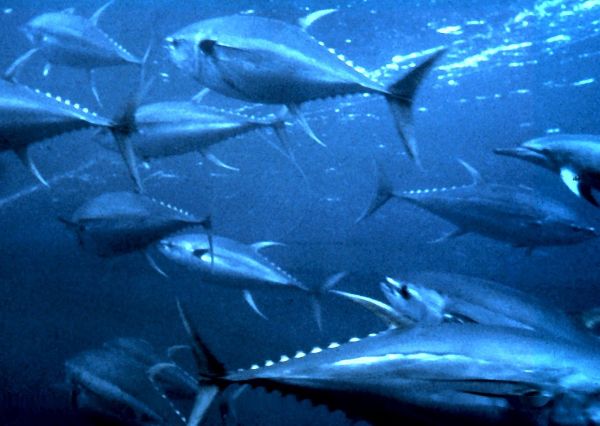
The European fishing fleet has established a significant presence in the tuna industry, utilising large vessels known as purse seiners that can carry up to 1.8 million kilogrammes of fish at once. Numerous such vessels operate in the Indian Ocean, targeting species such as skipjack, yellowfin, and bigeye tuna, which are subsequently processed for sale to consumers in grocery stores.
Recently, Jess Rattle observed purse seine ships operating in the Indian Ocean under the flags of Mauritius, Tanzania, and Oman. This observation raises important questions about the potential involvement of European corporations in these operations.
“We wanted to understand who really owned these vessels,” said Rattle, head of investigations at the London-based environmental charity Blue Marine Foundation. “Were they owned by the coastal states whose quota they were now using, or in fact, were they owned by the EU?”
A new report from the Blue Marine Foundation and Kroll reveals that European companies are responsible for one-third of the Indian Ocean’s tropical tuna catch, despite ongoing challenges with yellowfin and bigeye tuna stocks. This access is partly due to European fleets registering their ships under flags of countries such as Seychelles, Mauritius, Kenya, Tanzania, and Oman, thereby securing higher catch limits.
The European-owned fleet has grown to over 50 purse-seine and supply vessels, increasing catches even as the European Union seeks to enforce reductions. These findings emerge ahead of the Indian Ocean Tuna Commission’s annual meeting in the Maldives, where the EU and 28 countries will discuss the fishery. Although reflagging vessels is a common and legal practice, it complicates monitoring efforts, as layers of shell companies and foreign registries often obscure ownership.
“Europe’s opportunity to help stop overfishing is greater than first appears,” said Benedict Hamilton, a managing director at Kroll.
European companies have historically fished under the Seychelles flag, but Rattle pointed out that registering under the Oman and Kenya flags is new. According to Europeche Tuna Group, which represents the European tuna industry, its relationship with coastal nations reflects a long-term commitment and strong local partnerships. Spokesperson Anne-France Mattlet noted that the European industry supports regional economies through taxes, fishing license fees, and investments in local infrastructure. Europeche operates over 50 purse seine and supply ships in the Indian Ocean, including those registered under non-EU flags.
Maciej Berestecki from the European Commission stated that reflagging is a private decision, not influenced by public authorities, and the EU does not advocate for vessels flagged by other countries.
“The EU has done, and keeps doing, its utmost to promote and respect catch limits,” Berestecki said.
Despite being distant from the Indian Ocean, Europe’s fishing fleets have long played a big role there. Spanish and French tuna companies introduced purse seine ships in the 1980s, enabling them to boost their annual catch quickly. However, the EU has had conflicts with coastal nations over efforts to gain greater control over local fishing practices.
Five years ago, as yellowfin tuna stocks declined, the Maldives accused the EU of lacking a serious proposal to reduce tuna quotas during a tuna commission meeting. In 2023, the EU opposed Indonesia’s proposal to close purse seine fishing, which passed with support from 15 other countries.
Recently, the tuna commission has implemented measures to rebuild vulnerable stocks of yellowfin and bigeye tuna. For instance, the EU agreed to cut its yellowfin catch by 21%. These limits may encourage European fishing companies to seek quotas from other countries to maintain their catch levels, according to Glen Holmes of the Pew Charitable Trusts.
Holmes and colleagues are advocating for greater transparency in fishing fleet ownership in the Indian Ocean. Many shipowners register vessels under foreign flags, which limits oversight. Some flags are known as ‘flags of convenience’ that offer low fees and lenient regulations.
A January report from Oceana found that European companies often register fishing vessels under flags of countries known for ignoring illegal fishing. Oceana calls on EU nations to collect and publish ownership data for their fishing fleets to enhance enforcement against illegal fishing practices and clarify the actual composition of the EU fleet.
“What we found last year is that the real European fleet, if you add the non-EU flagged vessels, doubles,” said Vanya Vulperhorst, Oceana’s illegal fishing campaign director for Europe.
This article used information from The Associated Press.
