
On Tuesday, the European Commission introduced an 18th package of sanctions directed at Russia in response to its invasion of Ukraine. This comprehensive new package focuses on key areas, including Moscow’s energy revenues, its banking sector, and the military industry.
Notable proposals within this package include a ban on transactions involving Russia’s Nord Stream gas pipelines and prohibitions against banks engaged in sanction evasion. The Commission recommends adding 22 additional Russian banks to its sanctions list and broadening existing restrictions, extending beyond removal from SWIFT—a global financial messaging system—to an outright transaction ban. This proposal also seeks to apply similar restrictions to banks based in third countries, including the Russian Direct Investment Fund (RDIF), as well as its subsidiaries and broader network.
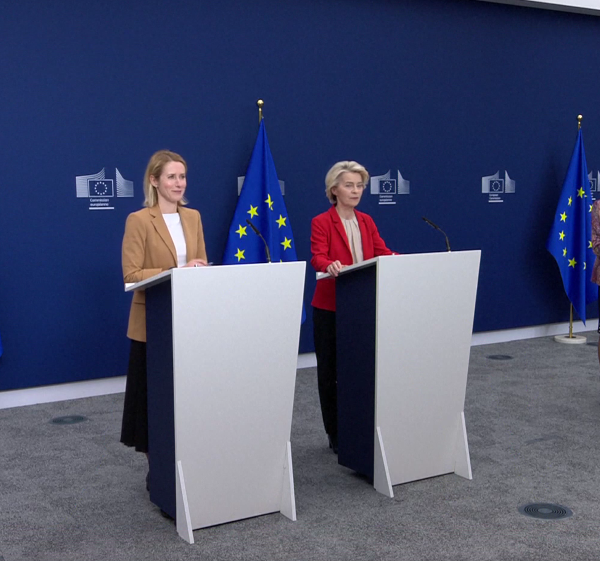
Ursula von der Leyen, President of the European Commission, stated at a press conference together with HR/VP Kaja Kallas that Russia’s actions indicate a disregard for peace, asserting that its objective is to assert dominance through force and emphasising that “strength is the only language that Russia will understand.”
“For the first time, we propose a transaction ban for Nord Stream 1 and Nord Stream 2. This means that no EU operator will be able to engage directly or indirectly in any transactions regarding the Nord Stream pipelines. There is no return to the past,” the EC President said.
Moreover, the Commission has proposed reducing the Group of Seven (G7) price cap on Russian crude oil from $60 per barrel to $45 per barrel, aiming to diminish Russia’s energy revenues further. This proposal will be discussed at the forthcoming G7 leaders’ meeting in Canada next week, with von der Leyen expressing confidence that the G7 will continue to present a unified approach, given the success of the cap introduced by the group.
Additionally, the proposal includes an updated list of vessels comprising Russia’s shadow fleet, which now totals over 400 ships, alongside oil trading companies. The Commission has also suggested a ban on the importation of refined products derived from Russian oil. Discussions among EU member states regarding this proposal are set to start this week.
