
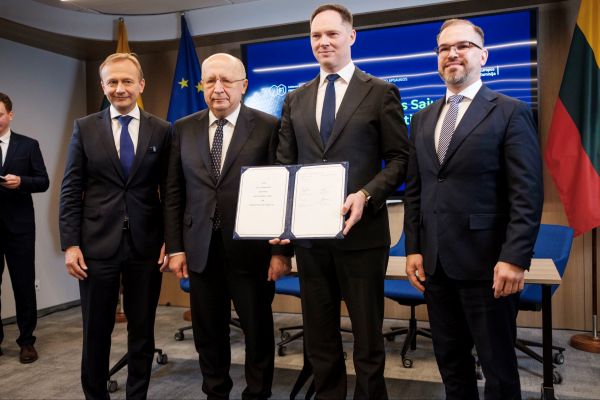
On 9 April 9, Lithuania formalised a significant loan agreement totalling €6.375 billion under the European Union’s SAFE defence funding initiative. This agreement is a strategic move to enhance Lithuania’s military capabilities amid heightened concerns about potential Russian aggression. The signing took place in Vilnius and was conducted by Lithuanian Finance Minister Kristupas Vaitiekūnas and Defence Minister Robertas Kaunas, with the presence of EU officials, including Defence Commissioner Andrius Kubilius and Budget Commissioner Piotr Serafin.
“Europe is strong when united! Today in Vilnius signing #SAFE loan agreement w Lithuania . 6.375 bln € will help Lithuania develop strong defence capabalities, support brigade in Lithuania & defend Eastern Flank of the EU. Happy #EuropeDay! Our Unity & Strength Day!,” Commissioner Kubilius posted on X.
The SAFE programme is a €150 billion EU initiative providing low-interest loans for military acquisitions, with a preference for European-made equipment. It was established to strengthen European defence in light of security threats from Russia’s actions in Ukraine.
Lithuania is the second country to enter into a SAFE loan agreement, following Poland’s commitment made the previous day.
Lithuania plans to allocate these funds towards essential military requirements, including ammunition supplies, counter-mobility measures, air defence systems, and anti-drone technology.
Minister Kaunas highlighted this strategic intent during the ceremonial signing, stating, “We will purchase medium- and long-range air defence systems and develop anti-drone solutions. This will provide our national budget with greater flexibility and enhance our response capabilities.”
The initial advance payment of approximately €956 million is expected to be disbursed to Lithuania within three months, according to Lithuania’s public broadcaster, LRT.
In total, 19 EU member states have expressed their intent to utilise this financing mechanism, with Poland being the primary beneficiary, allocated €43.7 billion. In recent years, the Baltic states and Poland have faced challenges linked to a hybrid campaign by Moscow, including cyberattacks and incursions by Russian military aircraft and drones. Lithuania has committed 5.38% of its GDP to defence spending this year, one of the highest rates among NATO members.
