
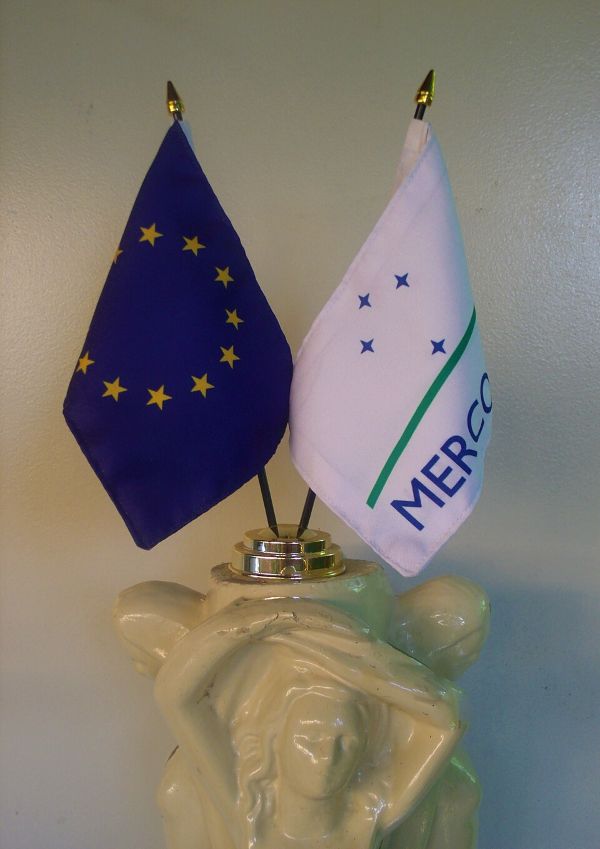
On Tuesday, Brazil announced that the European Union intends to block its animal product exports starting in September. This development follows the recent provisional implementation of the significant trade agreement between the South American trade bloc Mercosur and the EU, which is projected to create a trans-Atlantic market valued at $22 trillion.
The agreement, which is currently under review by the European Court of Justice, has faced considerable opposition from European farmers and environmental groups. Concerns have been raised about potential unfair competition, threats to local livelihoods, price pressures, and compliance with environmental standards. In response to the EU’s decision, Brazil’s agriculture ministry expressed surprise and indicated that the government would take measures to seek a reversal.
Brazilian media reports have indicated that the EU has asserted it did not receive adequate evidence demonstrating that animal products from Brazil and other countries are free of antimicrobial substances used for growth promotion.
According to data from Brazil’s government agency for animal products, EU nations are projected to be the third-largest market for Brazilian beef by 2025, following the United States and China. The EU-Mercosur free trade agreement came into force on 1 May. It was signed on 17 January during a gathering of the South American bloc, which includes Brazil, Argentina, Paraguay, and Uruguay.
European Commission President Ursula von der Leyen has provisionally enacted the agreement, effectively bypassing the EU Parliament, where the deal is currently facing scrutiny from lawmakers in the bloc’s judiciary. The agreement’s implementation will be suspended if the European Court ultimately rules against it.
This article used information from The Associated Press.
