
This Sunday, voters across Armenia will head to the polling stations for the first regular parliamentary elections since 2017, a significant moment for the country’s democratic path and future geopolitical trajectory. These elections take place against a backdrop of historic shifts, following the initialing of a peace agreement aimed at ending the long-lasting conflict with Azerbaijan, and of heightened domestic political polarization and mounting tensions between the ruling party and the opposition, and with the leadership of the Armenian Apostolic Church.
“When we look at this election, we have to recognize that Armenia is navigating a complex electoral landscape,” said Farah Karimi. “Over the last few years, the electoral legal framework has been substantially revised, even as recently as this year. While some address important issues, such as the misuse of administrative resources, vote-buying and voter pressure, and target election-related criminal offenses, it remains important to see how they will be implemented. We also need to consider recent developments in the campaign, most crucially the ongoing use of harsh and divisive rhetoric between contestants. We will closely monitor how the country’s political climate shapes the upcoming election, where voters will determine how the over 100 members of parliament, elected through a nationwide, party-list system, will represent them”.
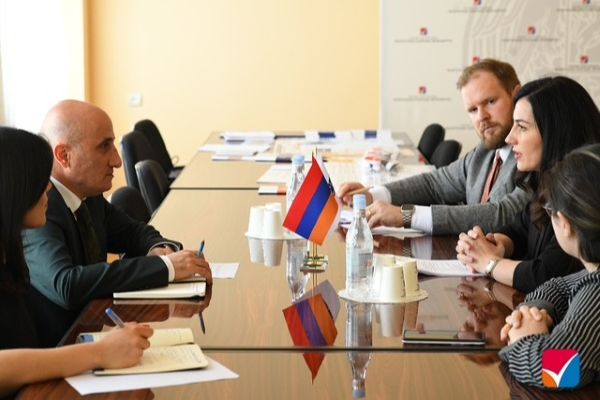
To evaluate the election environment, review readiness on the ground, and see how recent legal changes are being managed, the Head of the OSCE PA observer delegation conducted a visit for a pre-assessment in Yerevan ahead of the full deployment.
“As part of our preparations for the upcoming mission, I have just concluded a two-day pre-election visit to assess firsthand how Armenia is preparing for this important vote,” said Jevrosima Pejović in Yerevan. “During these days, I engaged extensively with state authorities, the Central Election Commission, various political parties and alliances, civil society representatives, media representatives, and our colleagues from the OSCE/ODIHR election observation mission who are already on the ground. The openness I encountered throughout these meetings reflects a strong willingness to engage with the international community. This groundwork is absolutely vital for our upcoming mission, and it will allow our observers to provide the independent and constructive assessment needed to support Armenia’s democratic path.”
Building on these initial meetings, the Assembly’s observation mission will look closely at how these new amendments operate in practice.
“We are closely following the reports from our OSCE/ODIHR long-term mission partners, who highlight a highly polarized environment marked by harsh rhetoric,” stated Karimi and Pejović. “Contestants are deploying a mix of traditional and digital campaign methods. Crucially, the long-term findings on the ground have flagged widespread reports of early campaigning being used to circumvent standard rules, alongside concerns raised by local stakeholders regarding foreign interference, the potential misuse of state resources, pressure on public sector employees, and the alleged political motivation behind recent criminal proceedings against senior opposition figures. As our parliamentary delegation prepares to deploy for election day, monitoring how these pre-election developments impact the actual voting process will remain our primary focus.”
Crucially, these elections take place in an era where the integrity of democratic processes is increasingly challenged by hybrid threats. Stakeholders expressed concerns regarding foreign interference, cyberattacks, and online disinformation.
The international presence on the ground includes a robust media monitoring component to analyze campaigning through traditional, online, and social media. In addition, the mission will also report on the mechanisms in place for institutions to detect and respond to these evolving digital threats, and on the impact of these issues on the campaign.
“To ensure a thorough, independent, and constructive assessment, our deployment will include more than 100 parliamentarians and staff from over 30 countries,” said Karimi. “We will work in close, joint coordination with our partners at OSCE/ODIHR, who are deploying 260 short-term observers, alongside the Parliamentary Assembly of the Council of Europe (PACE) and the European Parliament (EP), combining our efforts to provide a truly comprehensive evaluation of Armenia’s electoral process.”
The OSCE PA has a longstanding record of engagement in Armenia, marking this as the twelfth election observation activity in the country since 1995. The Assembly approaches its work with strict impartiality, deep professionalism, and utmost respect for the Armenian people. Preliminary findings and conclusions will be shared publicly the day after the election.
“Armenia stands at an important historical crossroads, with a revised electoral framework and complex geopolitical questions shaping the path ahead,” highlighted Karimi and Pejović. “We look forward to observing this vital process alongside our international partners and remain deeply committed to supporting Armenia’s continued democratic journey.”

Farah Karimi, Jevrosima Pejović
Farah Karimi (MP, Netherlands), Special Co-ordinator and leader of the OSCE short-term election observation mission, and Jevrosima Pejović (MP, Montenegro), Head of the OSCE Parliamentary Assembly Delegation of observers
