
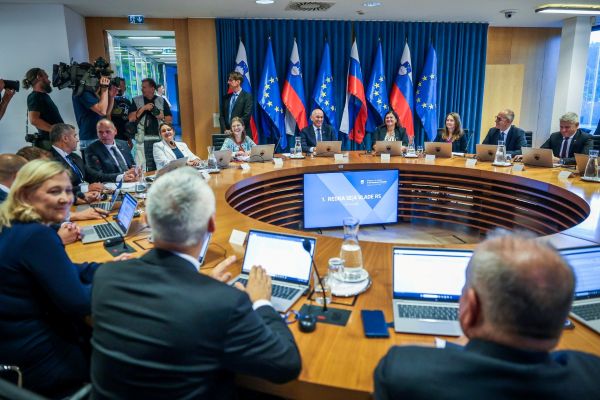
On Thursday, 4 June, Slovenia’s parliament formally approved the new government led by Prime Minister Janez Janša, marking a significant political shift to the right for the small European Union member state. The assembly voted 49-30 in favour of the new government, consisting of 90 members. This vote follows the March parliamentary elections, which resulted in no clear winner. While the Freedom Movement, led by former liberal Prime Minister Robert Golob, garnered the most votes, they were unable to secure a parliamentary majority.
At 67, Janša, who was appointed prime minister last month, leads the populist Slovenian Democratic Party (SDS). His coalition government has formed alliances with other right-leaning groups in the assembly. It has gained support from the non-establishment Truth party, which emerged during the COVID-19 pandemic as an anti-vaccination movement. This leadership marks Janša’s fourth term in office.
Janša is an admirer of US President Donald Trump and was previously a close ally of former Hungarian Prime Minister Viktor Orbán, who recently experienced a notable electoral defeat. Janša, like Orbán, adopted a firm stance against immigration during the huge migration wave to Europe in 2015 and faced criticism for perceived restrictions on democratic institutions and press freedoms during his previous term from 2020 to 2022. These actions led to protests and attracted scrutiny from the European Union.
In his inaugural address, Janša committed to governing “for all of Slovenia and for all generations,” asserting that his 15-member Cabinet possesses considerable experience. He also expressed intentions to reduce taxes and criticised Slovenia’s bureaucracy as excessively complex compared to that of other European countries. Additionally, he encouraged opposition parties to collaborate on key national issues moving forward.
The Cabinet includes Tone Kajzer, the former Slovenian ambassador to the US, who has been appointed as foreign minister. However, the appointment of Franci Matoz, Janša’s former lawyer, as interior minister has drawn some public criticism. A supporter of Israel, Janša has expressed strong opposition to the prior government’s decision, made by Golob, to recognise a Palestinian state in 2024. The incoming government is expected to work to improve Slovenia’s strained relations with Israel.
Allegations of foreign interference and corruption marred the 22 March election. Slovenia’s population of approximately 2 million remains deeply divided between liberal and conservative ideologies.
This article used information from The Associated Press.
