
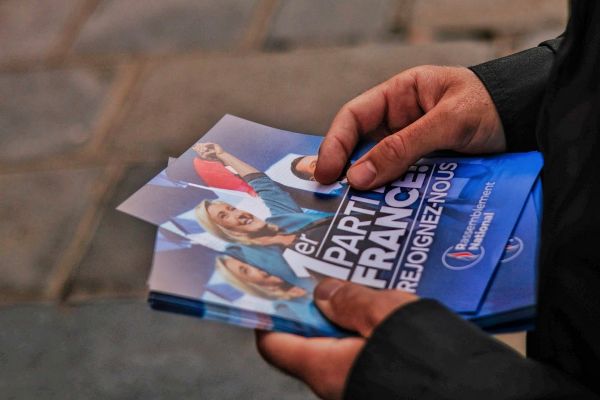
On 2 July, French far-right leader Marine Le Pen announced that she would refrain from running for president next year if a Paris appeals court ordered her to wear an electronic bracelet due to allegations of misuse of European Union funds. Nonetheless, after being sentenced to wear a court-ordered electronic monitor for embezzlement, she reconsidered her position and reaffirmed her intention to run for the French presidency next year.
The decision by the 57-year-old, who has previously competed in three presidential elections, marks the beginning of a unique campaign in which she may seek votes while under judicial monitoring. A judge will also determine the specific terms and duration of her sentence.
Le Pen indicated that she would appeal the ruling to France’s highest court, which would temporarily suspend the requirement for electronic monitoring for one year. During a television interview on Tuesday night, she stated, “I will therefore campaign without an electronic bracelet. Tonight, I am a candidate for the presidential election.”
An appeals court ruling on Tuesday allowed Marine Le Pen to seek public office by reducing a previous five-year ban. The court, however, required her to wear an electronic bracelet, which she argued would hinder her campaigning. After discussions with leaders from her National Rally party, Le Pen expressed confidence that she would not be monitored and that her appeal to the Court of Cassation would clear her name.
The highest court may rule before the presidential election, scheduled for April and May. In a related case, former President Nicolas Sarkozy was sentenced to serve part of his sentence under electronic monitoring. Still, his appeal led to the suspension of his sentence pending a review, ultimately upholding his conviction.
Appeals court upholds Le Pen’s guilt, reduces sentences
The appeals court ruled that Marine Le Pen mismanaged European Parliament funds through her National Rally party, using money meant for EU parliamentary assistants to pay staff. Although she denied criminal wrongdoing, Le Pen admitted during the trial that the party made a “mistake.” The court upheld guilty verdicts for all 11 individuals involved, including Le Pen, and found the party guilty of embezzling €2.8 million over more than 11 years.
While the chief judge noted the seriousness of the situation, the court reduced Le Pen’s five-year ban on seeking office to 45 months, with two-thirds suspended. Having already served 15 months, she now faces no obstacles to her political career. Additionally, her prison sentence was reduced from four years to three, also with two years suspended. Le Pen had previously stated that not being able to run in 2027 would feel like “political death.”
After leaving the courthouse, Marine Le Pen visited the National Rally’s headquarters in Paris to consult with her protégé, Jordan Bardella, and other party members. Bardella, a European Parliament lawmaker, was prepared to step in as the party’s presidential candidate if Le Pen’s electronic monitoring had prevented her from running. A Le Pen has appeared on the presidential ballot since 1988—four times for her father and three times for herself.
Le Pen’s recent embezzlement conviction makes her vulnerable to criticism. Still, she is attempting to frame the ruling as a campaign message, arguing it allows voters to support her in the upcoming election.
Originally founded as the National Front by her father in 1972, the party changed its name to the National Rally in 2018 to broaden its appeal and distance itself from his controversial legacy, which included associations with Nazi collaborators and multiple hate-speech convictions.
The court’s written verdict highlighted the importance of “the voter’s freedom of choice” and noted that Le Pen’s ban from seeking elected office has helped repair public integrity. It asserted that ignoring these factors would undermine the principle of the right to stand for election, which is essential to democratic participation.
This article used information from The Associated Press.
