
Russia likely used shadow ships to launch drones over Europe, disrupting civilian aviation while monitoring military sites and testing NATO air defences, according to a report from the International Institute of Strategic Studies (IISS). The report documented 144 suspected drone sightings across NATO member countries, including Germany, France, and Denmark, from 2024 to 2026.
Sightings peaked in late 2025, leading to temporary airport closures in several countries. Danish Prime Minister Mette Frederiksen described these incidents as “the most serious attack on Danish critical infrastructure to date.” The IISS characterised the Russian campaign as a “strategic failure” for Europe, revealing the continent’s inadequate readiness to handle such threats.
NATO’s deputy supreme allied commander, Air Chief Marshal John Stringer, noted that responses to these threats are the responsibility of individual member states, many of which are taking them seriously. While officials find it hard to attribute the drone activity to Russia directly, Stringer highlighted a pattern consistent with Russian behaviour since the invasion of Ukraine in 2022. Sweden has been the only country to accuse Moscow of these incidents directly. In May, President Vladimir Putin denied that Russia is conducting a sabotage campaign against Europe.
European countries face challenges in drone response, reports IISS
Drones are hard to detect because they fly low and slow, often appearing as birds or small planes on radar. They can be launched from within or near national borders, bypassing missile defences designed to intercept supersonic threats. Even when a drone is shot down, identifying its origin and purpose is difficult.
Recent incidents have underscored the need for stronger drone defences in Europe, as noted by IISS. Lt. Gen. Jonny Lindfors, Sweden’s military representative to NATO, pointed out that the responsibility for drone threats is often divided among different authorities, complicating response efforts. He added that shooting down a drone is a tough decision due to the risk of civilian casualties.
In a June report, Denmark’s Defence Command stated that the armed forces could have been better prepared to respond to drone sightings and identified shortcomings in equipment. Following these events, Denmark and other European countries are enhancing their drone defences, recognising that counter-drone systems are now a crucial part of air defence.
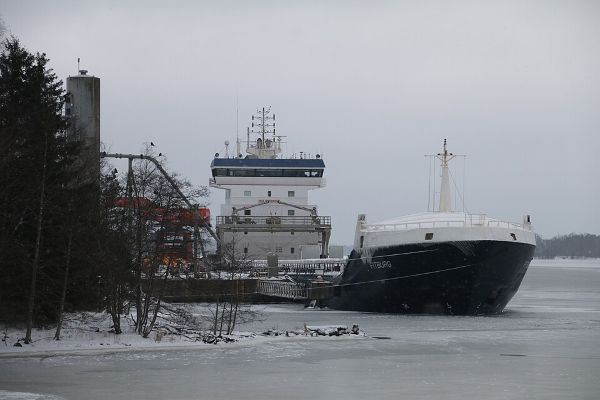
IISS says Russia is launching drones from shadow ships
IISS tracked Russia’s shadow fleet—ships with unclear ownership that help evade sanctions—and concluded they are likely being used to launch drones. The report focused on drone sightings in central and northwest Europe. Still, it did not assess incursions along NATO’s eastern flank, where numerous Russian and Ukrainian attack drones have entered European airspace.
On 2 December, the shadow ship Vezhen was seen sailing off the Irish coast as Ukrainian President Volodymyr Zelenskyy visited. During this time, four large military drones flew above an Irish navy ship near Dublin. The Irish Defence Forces did not comment on the report.
In Denmark, on 3 January 2025, the shadow vessel Arctica was present when up to 20 drones flew over the port of Køge. On 22 September, drone sightings led to the closure of Copenhagen Airport, with several shadow ships, including the Arctica and Boracay, in the vicinity. The IISS noted that suspicions regarding Boracay arose during these events. The French military later boarded the ship, and President Emmanuel Macron stated he could not rule out its involvement in the drone flights.
Denmark’s Defence Command confirmed drone activity in its airspace in September and October but did not directly link it to Russia. However, they noted that Russia is conducting hybrid attacks against the West on a scale beyond previous actions before the war in Ukraine. Lindfors remarked that while it’s reasonable to assume Russia is launching drones from these ships, attributing them to specific countries is often nearly impossible.
Russia’s drone surveillance over military installations, the report said
The report concluded that Russia likely sought to monitor military sites in the U.K., Netherlands, Belgium, France, and Germany, prompting NATO members to scramble against drone incursions, which could reveal radar positions and defence gaps. The IISS reported multiple drone sightings by the US Air Force over four air bases in the U.K. in November 2024, while German authorities recorded over 1,000 suspicious drone sightings in 2025, including near facilities where Ukrainian soldiers were training. Additionally, drones were spotted over military bases in the Netherlands and Belgium, with some bases believed to host American B61 nuclear bombs.
The US Air Force could not confirm the presence of nuclear weapons or provide further details on these incidents. A British defence official stated that investigations found no conclusive links to Russia. The Dutch Defence Ministry acknowledged drone sightings over Volkel Air Base and took measures to protect military sites. An ongoing investigation by the French military was reported regarding the Ile Longue base.
Lindfors remarked that given the frequency of such incursions, it would be naive to dismiss them as mere coincidence, suggesting these threats may now be a new normal.
This article used information from The Associated Press.
