
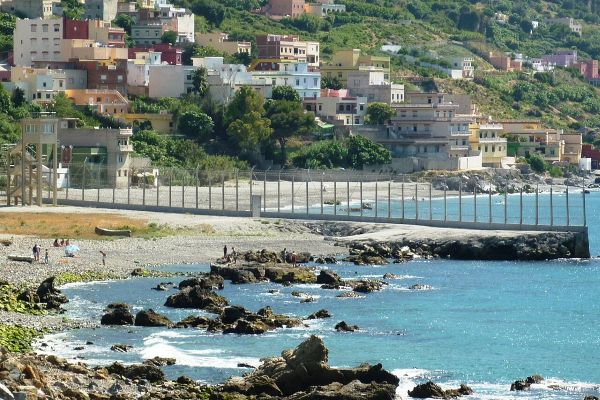
Italy has announced it will extend border checks on visitors arriving from Spain for an additional 15 days. This decision follows a significant influx of more than 72,000 migrants from Morocco into Spain’s North African territory of Ceuta in late July. In response to Italy’s measures, the Spanish government has also decided to prolong its own border checks on individuals coming from Italy for the same duration, as reported by the Spanish foreign ministry.
While most migrants have returned to Morocco, Italian Premier Giorgia Meloni’s administration, alongside other European leaders, has used the situation in Ceuta to criticise Socialist Prime Minister Pedro Sánchez’s migration policies. Before the crisis in Ceuta, his government launched a campaign to regularise migrants in Spain.
Italy’s border controls, which involve random police checks at airports and seaports for arrivals from Spain, were initially justified by concerns regarding internal security. The Italian Interior Ministry has reiterated these concerns in the recent decision to extend the checks, informing the European Union and other European nations that “high risks to internal security persist, along with potential threats related to possible terrorist infiltration.”
Spain, for its part, said it would maintain its retaliatory measures because the conditions that led to their implementation—Italy’s original sanctions—remain unchanged.
EU visa-free travel area
The 27-member European Union (EU) has a visa-free travel area, Schengen, allowing citizens to move easily across borders. Member states can temporarily reintroduce border controls in response to serious threats, but only as a last resort.
Before Italy imposed border checks, travellers from Ceuta and Melilla, Spain’s territories in North Africa, were already facing EU border inspections. NGOs reported over 140 deaths during attempts to cross into the territory, with some drowned or trampled.
Currently, more than 5,000 migrants remain in Ceuta, creating a humanitarian crisis for Spanish Prime Minister Sánchez.
Spanish migration approach
In April, the Spanish government finalised a migrant amnesty measure that allows hundreds of thousands of immigrants living and working without authorisation to apply for legal status. This policy stands in stark contrast to attitudes in many other European countries, which focus on reducing incoming migrants and increasing deportations.
Prime Minister Pedro Sánchez called it “an act of justice and a necessity,” saying eligible migrants should work and live under equal conditions and meet tax obligations. He stated, “We recognise rights, but we also demand obligations.” Eligible individuals can apply for a one-year residency and work permit under the new policy.
This article used information from The Associated Press.
