
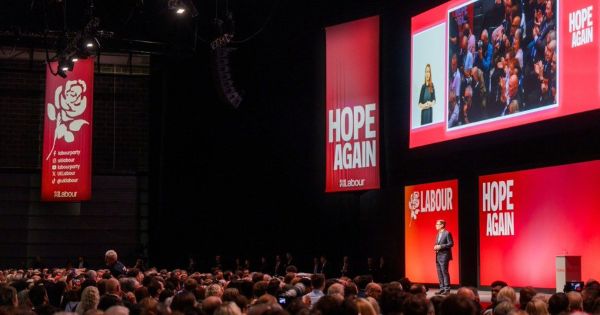
For the past decade, British governments have followed a key guideline: avoid discussing Brexit. In particular, there has been a consensus against suggesting that voters’ 2016 decision to leave the European Union should be reconsidered.
Recently, Prime Minister Andy Burnham, who has just completed his 100th day in office, has broken this longstanding silence and reignited a discussion that has previously caused considerable division in the country. He has said Brexit has not achieved its intended goals and has called for the United Kingdom to pursue a closer relationship with the European Union, including the possibility of rejoining the 27-member bloc.
“I am positive about closer ties with Europe, and I’m not hiding that,” Burnham told the Sunday Times. “I think it will add to British GDP. I think it will give us stronger control of migration. I want to make those arguments.”
In recent interviews, Burnham has called for an “evidence-based debate” on the consequences of Brexit, citing immigration as an example. While supporters claimed leaving the EU would give the UK control over its borders, Burnham argued it has made it harder to manage unauthorised migration because the UK lost access to EU databases and agreements.
“The truth of the matter is we’ve lost immigration control in the way that we once had,” Burnham told broadcaster ITV on Monday.
Brexit brought economic and political pain
Most economists agree Brexit has harmed the British economy, but few politicians want to revisit it. The 2016 decision to leave the European Union, which passed 52% to 48%, ended four decades of membership and led to years of negotiation. Britain officially left the EU in 2020 with a minimal trade deal that created new barriers for businesses.
PM Burnham seeks closer ties with the EU but is constrained by former Labour leader Keir Starmer‘s pledge not to rejoin the EU’s customs union or single market. Burnham has suggested this could change after the next election, due by 2029, saying “Brexit has done more harm than good.” He aims to create political consensus for a new relationship, potentially including rejoining the bloc.
A UK-EU summit in Brussels on November 20 will discuss limited agreements on trade, energy, and youth work opportunities. Burnham plans to present long-term options for the relationship with Europe and seek public input, while informal talks on future relations are already underway, considering possibilities such as rejoining the single market and restoring freedom of movement.
The EU is welcoming but wary
The European Union has welcomed Britain’s warmer tone but remains cautious about the UK’s efforts to obtain exclusive EU benefits. The renewed Brexit debate in Britain has generated mixed emotions, including hope and anxiety. Nigel Farage, leader of the far-right Reform UK party and a key figure in the Brexit campaign, claimed that Burnham has “no mandate” to renegotiate. Even within the Labour Party, opinions are divided. Lawmaker Melanie Onn, representing a pro-Brexit constituency, warned against reopening past divisions.
“Political trust is hard won and easily lost,” she wrote on the Politics.co.uk website.
David Henig, a trade expert at the European Centre for International Political Economy, has observed that public support for Brexit has gradually diminished over the years. Nevertheless, he notes that politicians remain hesitant to revisit the issue, which has significantly shaped UK politics and led to a period marked by a remarkable turnover of seven prime ministers in just a decade.
This article used information from The Associated Press.
