
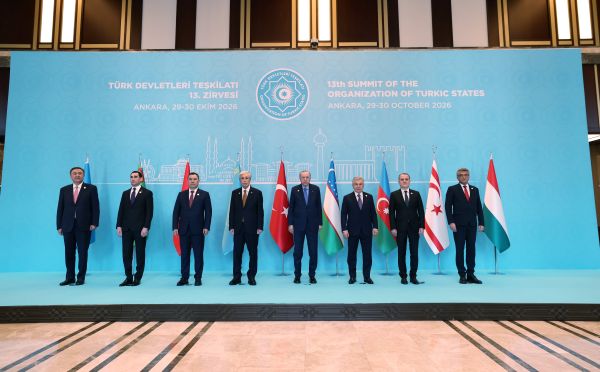
Azerbaijani President Ilham Aliyev did not attend the regional summit hosted by Turkey on Friday, raising concerns about a potential rift between the two countries, which have traditionally enjoyed a close alliance characterised by deep cultural and ethnic ties.
Often referred to as “one nation, two states,” Turkey and Azerbaijan have recently experienced rising tensions, particularly following criticism in Turkey regarding Azerbaijan’s decision to prohibit the wearing of hijabs in schools and the strengthening of Baku’s relations with Israel.
Anticipation around President Aliyev’s participation in the Organisation of Turkic States summit in Ankara became a focal point for assessments of the current diplomatic relationship. Foreign Minister Jeyhun Bayramov represented Azerbaijan at the meeting, with Azerbaijani media attributing Aliyev’s absence to prior commitments. This organisation includes Turkey, Azerbaijan, Kazakhstan, Kyrgyzstan, and Uzbekistan.
Farman Aydin, an analyst writing for Azerbaijan’s pro-government outlet, Azernews, noted the emergence of a hostile campaign against Azerbaijan. He highlighted the particular discomfort this causes for Azerbaijanis, given their perception of Turkey as a close ally. He further suggested that Aliyev’s decision not to attend the summit might serve as a diplomatic signal, reinforcing the idea that even the closest partnerships necessitate mutual respect.
The rift became apparent when social media users in Turkey and certain members of Turkish President Recep Tayyip Erdoğan‘s ruling party criticised Azerbaijan’s September decision to ban girls and teachers from wearing Islamic coverings in educational institutions. Additionally, small-scale protests occurred outside Azerbaijani diplomatic missions in Turkey, which has reversed similar hijab bans since Erdoğan took office in 2003.
Further complicating matters, many individuals in Turkey, a staunch critic of Israel’s military actions in the Middle East, have expressed concerns regarding Azerbaijan’s deepening ties with Israel. This criticism has provoked a strong response in Azerbaijan, which has voiced dissatisfaction over perceived interference in its internal affairs. However, the Turkish government has not issued any official statements concerning the hijab ban. In response, Azerbaijan has placed travel bans on more than 30 Turkish nationals, including the leader of a small Islamic-leaning opposition party, due to their criticisms of the hijab ban.
To ease tensions, President Erdoğan invited President Aliyev to the summit earlier this week and reportedly dismissed an aide, Oktay Saral, at the Azerbaijani president’s request, as reported by Cumhuriyet and other media outlets. In his opening remarks at the summit, Erdoğan underscored the necessity for unity among Turkic-speaking countries, stating, “There is no room for division, discord, or dispute in the family portrait of the Turkic world. We are all one; we are together. God willing, we are brothers from eternity to eternity.”
Turkey’s relationship with Azerbaijan is also relevant to its efforts to normalise relations with neighbouring Armenia, including the potential reopening of their shared border to boost trade and revitalise local economies on both sides. The border was closed in the 1990s in support of Azerbaijan during its conflict with Armenia, and Turkey has tied any normalisation efforts with Armenia to advancements in reconciliation between Armenia and Azerbaijan.
This article used information from The Associated Press.
