
US President Donald Trump is couching his demands that allies help him with the Iran war by claiming that they owe Washington for decades of US security guarantees.
Since his return to the White House, Trump has bullied allies about tariffs, Greenland and other issues, as well as disparaging sacrifices their soldiers made alongside US troops in Afghanistan.
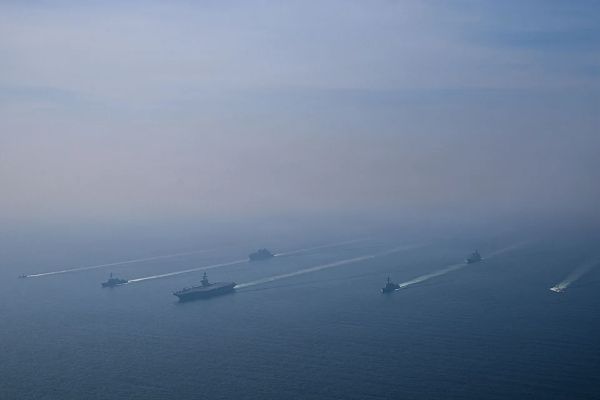
Now he’s demanding they send naval vessels to help the US unblock the Strait of Hormuz, through which a fifth of the world’s traded oil passes.
So far, no close ally has responded with immediate help. The UK has refused direct involvement while the French say the fighting must first die down. Others remain non-committal. China, though not an ally, was also asked to help, but continues to ignore Trump’s call.
European Union foreign policy chief Kaja Kallas put it bluntly on Tuesday, declaring: “This is not Europe’s war. We didn’t start the war. We were not consulted.”
A frustrated Trump has taken particular issue with UK Prime Minister Sir Keir Starmer, saying he was unhappy with Britain’s less than enthusiastic response to his request for minesweepers, especially considering it was once “the Rolls Royce of allies”. He pointedly went on to note how the US had been “protecting these countries for years.”
Saying the UK would not “be drawn into the wider war”, Starmer stressed that British troops required the backing of international law and “a proper thought-through plan.” After refusing US bombers the use of British bases to launch attacks on Iran, Starmer relented and gave the green light allowing them to use the bases for strikes on Iran’s ballistic missile programme.
Trump’s failure to get an international mandate, as was the case when before the US intervened in the 1990 Gulf War, is having repercussions.
“It is not our war; we did not start it,” German Defence Minister Boris Pistorius stated flatly. “We want diplomatic solutions and a swift end to the conflict. Sending more warships to the region will certainly not contribute to that.”
France’s President Emmanuel Macron indicated that French naval escorts might patrol the Strait of Hormuz, but not before the fighting has ended. “France didn’t choose this war. We’re not taking part,“ he declared.
French military spokesman Col. Guillaume Vernet said any escorting would be conditional on talks with Iran, and Macron has publicised two calls in eight days with Iran’s President, Masoud Pezeshkian. Meanwhile, France has rushed its Charles de Gaulle aircraft carrier to the Mediterranean.
Trump’s latest claims for US control of Greenland, along with tariff threats against eight European nations, plus his false assertion that allied troops avoided front-line fighting in the Afghanistan War, have upset NATO partners.
“Allies, or at least the Europeans, aren’t willing to be at the beck and call of a demand from Donald Trump,“ said Sylvie Bermann, a French former ambassador to China, the UK and Russia.
However, European allies do need to be in Trump’s good books for US weaponry, intelligence, and other support for Ukraine, as well as to maintain financial pressure on Russia. The US has also eased some sanctions on Moscow, temporarily allowing shipments of Russian oil to offset shortages stemming from the Iran war.
This article used information from The Associated Press.
