
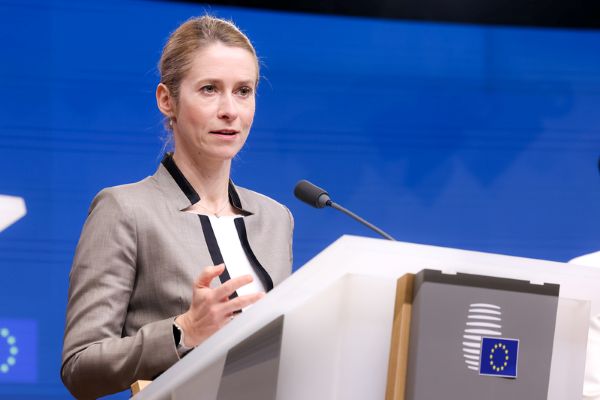
European Union Foreign Policy Chief Kaja Kallas highlighted in a recent interview with Corriere della Sera that a durable peace agreement for Ukraine necessitates specific concessions from Russia. These concessions should include a reduction in Russia’s military budget and a decrease in the size of its armed forces.
Kallas asserted, “The primary obstacle to peace is Russia. Even if Ukraine is provided with security guarantees and Russia makes no concessions, we may encounter conflicts elsewhere, not limited to Ukraine.“
Kallas acknowledged the EU’s favourable stance on the United States’ peace initiative for Ukraine but underscored a perceived lack of genuine commitment to peace on Russia’s part. She emphasised, “A ceasefire is essential. For peace to be meaningful, we must ensure that Russia will not engage in further aggression. Concessions from the Russian government are critical, which include reducing its military capabilities and curtailing its military budget.”
Furthermore, Kallas emphasised the need for Europe to determine its own security framework. “Borders cannot be altered through force. There should be no territorial concessions or recognition of occupation, and the European security architecture must not afford Russia a direct role,” she stated.
Regarding Ukraine’s potential to join the EU in 2027, as reportedly discussed between Ukraine and the United States, Kallas indicated that the accession process relies on substantive criteria and ultimately rests with the member states.
Kallas sent a clear message: “First, Russia must not outlast us or outspend us. Second, we will provide Ukraine with the full support it requires. Third, we assert that decisions regarding our matters will be made independently of the United States.” She further noted, “We are enhancing our defense capabilities and industry to ensure we are not reliant on external entities. This effort requires the collective involvement of the EU, including those member states that may be geographically distanced from the conflict and do not currently perceive an urgent need to engage.”
